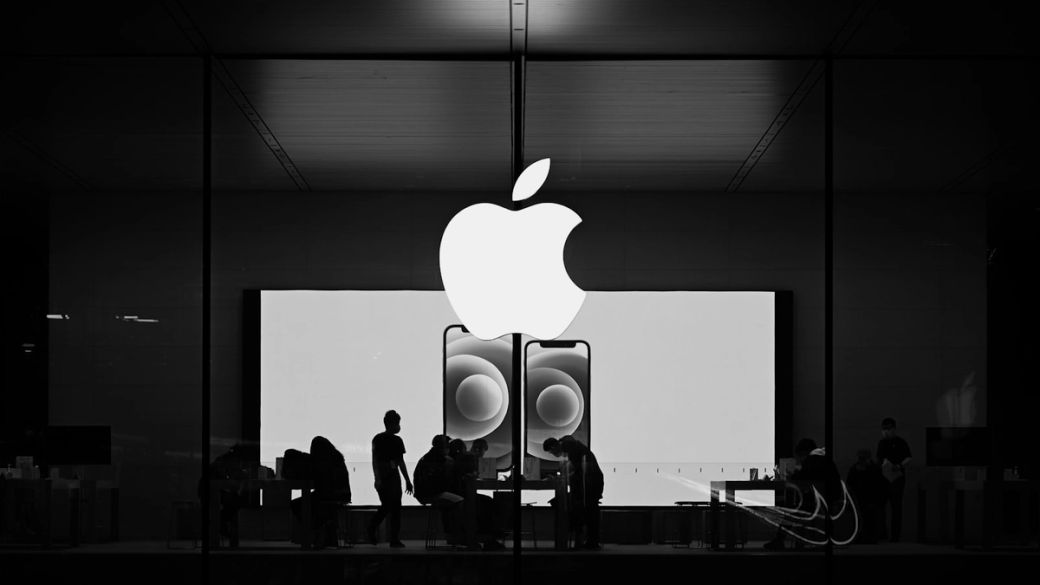
Apple will host WWDC in Cupertino on Monday, and for the first time in the company's history, the most important announcement will be about someone else's technology.
Google's Gemini has been selected to power Apple's AI-driven Siri, running on Apple devices and within the company's private cloud compute environment. Apple evaluated the available models and concluded that its own were not good enough. Gemini was chosen as the most capable foundation for what Apple is calling Apple Foundation models.
That decision, buried inside the pre-WWDC briefings, is the most significant strategic admission Apple has made in a decade.
Siri problem
Siri has been a punchline for years. While ChatGPT, Claude and Gemini transformed what users expect from AI assistants, Siri remained a voice-activated search tool that struggled with basic tasks. Apple's internal AI efforts, branded as Apple Intelligence, launched to underwhelming reviews in 2024 and failed to close the gap.
The Gemini partnership is Apple's acknowledgment that it cannot build a competitive AI model in-house on the timeline the market requires. Rather than continue falling behind, Apple is doing what it has done before with maps, search and cloud services: outsource the capability and control the experience.
iOS 27 will introduce a standalone Siri app with personal context, an updated interface and the ability for users to choose their preferred AI provider. Any model developer that adds support for iOS 27 can compete for Apple's user base. Claude, Gemini and others will sit inside the Apple ecosystem, accessible through a unified interface.
Monetisation thesis
Wedbush analyst Dan Ives, who maintains an outperform rating and a $400 price target on a stock trading at $310, argues that AI monetisation could add $15bn in annual services revenue and $75 to $100 to the share price.
The logic runs like this. Apple controls 2 billion active devices. iOS 27 opens the platform to AI-driven applications across health, fitness, finance, lifestyle and every other category in the App Store. Developers build AI-native apps. Apple takes its commission. AI services and storage features become a new revenue layer on top of the existing services business.
The App Store ecosystem generated $1.4 trillion in developer billings and sales in 2025. AI-enabled apps already grew four times faster than non-AI apps in the top 100. The infrastructure is in place. The question is whether Apple can capture meaningful revenue from the AI layer rather than letting the model providers take the value.
CEO transition
WWDC is also a foundational moment for John Ternus, who will take over the CEO role from Tim Cook later this year. Ives noted that Ternus is "not going to take over the CEO baton with a treadmill approach," which is polite language for saying the new CEO needs to demonstrate that Apple's AI strategy is more than cosmetic.
Ternus built his reputation on hardware. The M-series chips, the Vision Pro and Apple's silicon strategy are his legacy. Whether he can translate that hardware expertise into an AI platform that generates services revenue at scale is the defining question of his tenure.
The China dimension
Apple's partnership with Alibaba on AI in China adds a geopolitical layer. The company is pursuing its massive installed base in the Chinese market with a local AI partner, navigating regulatory requirements that prevent Western AI models from operating there.
The dual-partner approach, Gemini globally and Alibaba in China, gives Apple coverage across its two largest markets but also creates complexity that competitors with their own models do not face.
The real question
Apple has more cash, more consumers and more brand recognition than any technology company in the world. It also has the weakest proprietary AI capability of any major platform.
WWDC will reveal whether Apple has found a way to monetise AI without building it, or whether outsourcing intelligence to Google means outsourcing the value that comes with it.
The hardware moat is deep. The software moat is being rented. Monday will show whether that combination is a strategy or a stopgap.