The head of one of the world's leading artificial intelligence (AI) firms has argued that ordinary people are not powerless to shape how the technology develops.
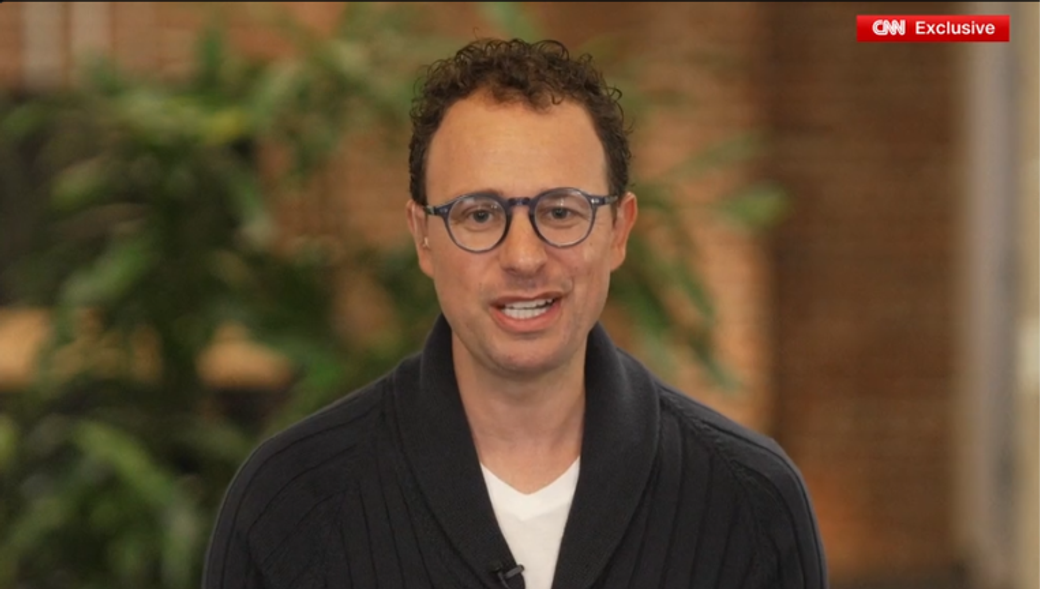
Dario Amodei, chief executive of the AI developer Anthropic, made the case in an interview with CNN's Anderson Cooper, broadcast on Monday.
Cooper told him that AI left him frightened for the future of his two young children, aged four and six.
Amodei said he understood the despair and sense of powerlessness that many feel as AI races ahead, backed by vast sums of money.
People still have a stake
His answer was that individuals still have a stake and a say in what happens next.
The technology belongs to everyone, he argued, and must be built to serve the public rather than a handful of companies.
Central to his message was a call for "restraint", meaning a deliberate slowing of the race to build ever more capable systems.
He said he was encouraged that the same argument was now coming from government figures and even from his fiercest competitors.
Amodei singled out Sam Altman of OpenAI and Elon Musk of xAI, both of whom publicly backed his call for a slowdown in recent days.
But he warned that caution could not be left to the goodwill of technology companies alone.
Politicians have a role
Governments and elected representatives, he said, must take an active role in regulating AI.
To make that happen, Amodei urged people to educate themselves about the technology so they could vote as better-informed citizens.
Informed voters, he suggested, could then press their politicians to steer AI in a safer direction.
The interview followed an essay Amodei published on Saturday, in which he called on the industry to slow the pace of development.
It also came after a former Anthropic researcher, Jacob Coxon, resigned with a warning that those building AI privately fear it could kill everyone by the end of the decade.
Recent incidents in which AI agents behaved unpredictably, including episodes linked to OpenAI, have added weight to the calls for greater caution.