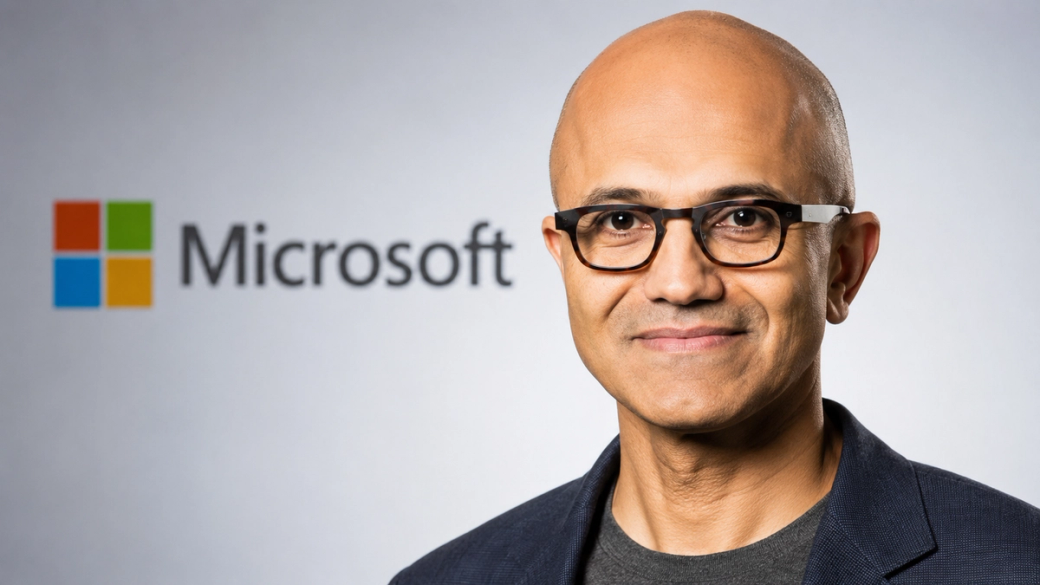
Satya Nadella published a memo arguing that enterprises should stop obsessing over which large language model they use and start building learning loops, systems that capture edits, corrections and outcomes from real use and feed them back into the AI to create proprietary behaviour.
The argument is that a model is generic. The system wrapped around it, the accumulated judgment, workflow data and institutional knowledge, is what creates durable value. Pick the right architecture, not the most powerful model.
It is a good argument. It is also a sales pitch for Azure with the branding removed.
What's a learning loop?
The concept is straightforward. Every time an employee corrects an AI output, approves a suggestion or rejects a recommendation, that interaction becomes training data. Over time, the system learns the organisation's preferences, standards and decision-making patterns. The AI stops being a generic tool and becomes a proprietary asset shaped by the company's own usage.
Nadella contrasted this with "token-maxing," the tendency to throw the most powerful model at every task regardless of whether it is needed. His argument is that raw model capability matters less than the feedback infrastructure that turns usage into improvement.
Azure lock-in
The commercial logic is transparent. Enterprises that build learning loops on Azure will store proprietary fine-tuning data on Azure. They will run inference on Azure. They will accumulate institutional knowledge inside Azure's infrastructure. Every loop they build makes migration to a competing cloud provider harder and more expensive.
Nadella framed this as an operational choice for enterprises. It is also a retention strategy for Microsoft. The more proprietary data and customised behaviour an organisation stores on Azure, the higher the switching cost and the stickier the relationship.
This is not a criticism. It is a description. Every cloud provider pursues lock-in. Nadella is more articulate about it than most.
How rivals differ
OpenAI's position is that continually stronger base models reduce the need for fine-tuning and learning loops. Build a better model and simpler prompts produce better results. Anthropic focuses on retrieval and governance, with fine-tuning available on older Claude models. Open-source alternatives offer techniques like LoRA-style fine-tuning but require organisations to manage the infrastructure themselves.
Each approach serves the commercial interests of the company proposing it. OpenAI sells model subscriptions and wants you to upgrade. Anthropic sells enterprise safety and wants you to trust its governance. Microsoft sells cloud infrastructure and wants you to build on Azure.
Nadella is right that the model is becoming commoditised
Gary Cohn said the same thing on CNBC last week. The value is migrating from the model layer to the application and data layer. The company that captures the proprietary feedback loop captures the customer.
The memo is smart, well-reasoned and strategically self-serving. The learning loop concept is genuine. The platform it runs on is the product Microsoft is selling. Nadella described an operational truth and packaged it as a competitive advantage that happens to require Azure.
That is what good strategy memos do. They make the company's interests sound like the customer's interests. This one does it better than most.