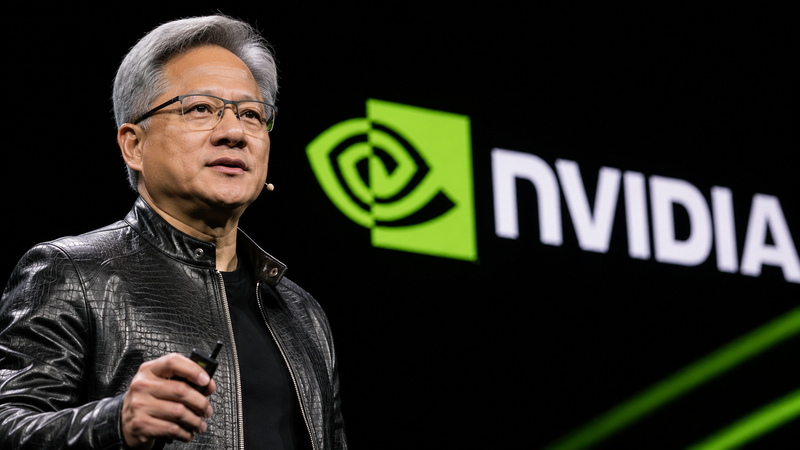
Google has released the details of two new processors that aim to meet the ever growing demand for AI compute, and compete with Nvidia's dominance among AI chipmaking.
It represents the eighth-generation tensor processing unit (TPU) lineup, TPU 8tx and TPU 8i Max, built for confidential computing and large-context reasoning tasks.
These custom AI chips are designed for Google Cloud customers running autonomous AI agents. Specifically, Google said the chips are designed for organisations undertaking regulated work, and governmental customers who handle sensitive data alongside frontier models, according to the company's blog post.
The release follows April's launch of TPU 8t and TPU 8i which, Google says, offered up to 2.7 times better training performance and 80% better inference price performance than the prior generation.
"This is the first time we have introduced four TPU systems in a single year", it said.
Google added: "When we built our very first TPU more than a decade ago, we knew AI software would evolve much faster than silicon manufacturing ever could. So we made a foundational bet on system balance and modularity, architecting our TPUs as building blocks as part of our AI Hypercomputer, so engineers could rapidly adjust packaging, high-speed memory, optical networking, and security around them.
"That approach allows us to deliver specialized supercomputers in a matter of months rather than years."
Big specs
Google detailed that the TPU 8tx builds encryption into the hardware layer.
What that means for customers is that it keeps data and AI model weights protected. Google added that it uses the same low-latency Boardfly network as TPU 8i, to deliver up to twice the latency improvement over TPU 8t.
TPU 8i Max, meanwhile, combines two TPU 8i chips on a single package, doubling compute, SRAM and high-bandwidth memory versus TPU 8i while fitting twice the silicon into the same rack footprint.
The Google release also highlighted that it has open-sourced TorchTPU, enabling PyTorch code and Hugging Face models to run natively on the TPUs, meanwhile, the newly introduced TPU Sync, memory-layer tool, is expected to cuts 'time-to-first-token' by more than 90%.
"We first designed TPUs more than a decade ago motivated by Google’s internal demands, including voice recognition and language translation. Eight generations of TPUs later, the use cases have exploded ... The new TPU systems we are announcing today address this new reality. Coupled with our recent PyTorch announcements, our aim is to make TPUs more easily accessible to every developer and Cloud customer," Google said.