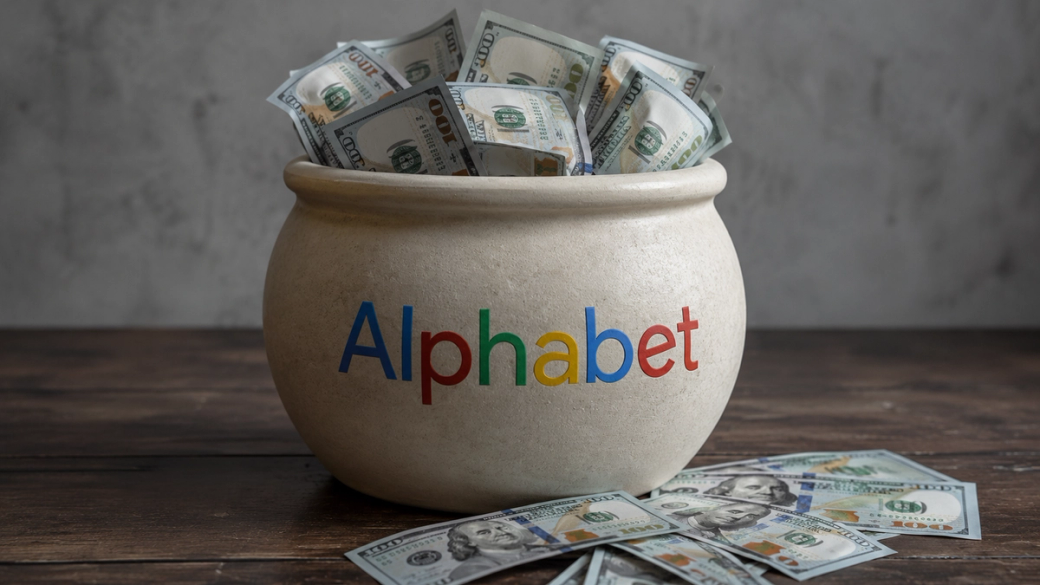
Alphabet announced on Monday that it plans to raise $80bn through a combination of equity offerings to fund its AI infrastructure buildout. The move is significant not just for its scale but for its timing: Google's parent is getting to the capital markets well before three of the most anticipated IPOs in history absorb an enormous amount of investor capital.
SpaceX is expected to list around June 12 in what could be the largest IPO ever, targeting a valuation of up to $1.8 trillion. Anthropic filed a confidential S-1 with the SEC on June 1 and could debut as early as this autumn. OpenAI filed confidentially around May 22 and is targeting a September listing at a valuation above $1 trillion.
Between them, those three offerings could absorb more than $100bn in new investment. Alphabet is moving first, raising its capital while institutional appetite is still fresh and the pipeline is not yet competing with trillion-dollar AI listings.
How the $80bn breaks down
The raise has three components. A $30bn underwritten public offering, split between depositary shares representing mandatory convertible preferred stock, Class A common stock and Class C capital stock. A $40bn at-the-market programme that will sell shares gradually beginning in the third quarter. And a $10bn private placement with Berkshire Hathaway.
Goldman Sachs, JPMorgan Chase and Morgan Stanley are running the underwritten offerings. Goldman is also placing the Berkshire deal.
The Berkshire Hathaway angle
The $10bn investment from Berkshire Hathaway is the most striking element. Warren Buffett's successor Greg Abel has historically been cautious about technology investments, and Berkshire has been sitting on record levels of cash, widely interpreted as scepticism about current valuations.
Yet Berkshire has been building an Alphabet position since the third quarter of 2025. The private placement, split equally between Class A shares at $351.81 and Class C shares at $348.20, formalises what was already an emerging conviction.
The signal is clear. Berkshire is not investing in AI as a speculative bet. It is investing in the company with $174bn in trailing 12-month operating cash flow, 63% year-on-year cloud revenue growth, and a business model that generates profit while spending at unprecedented levels. This is Berkshire buying infrastructure, not hype.
Why Alphabet needs the money
The numbers are staggering. Alphabet expects to spend between $180bn and $190bn in capex this year, with 2027 projected to be "significantly" higher. When asked what keeps Google executives up at night, CEO Sundar Pichai said the answer was compute capacity.
Google Cloud's backlog nearly doubled quarter on quarter to more than $460bn. Developers using Google's models exceed 8.5 million monthly. First-party API token processing grew sixfold over the past year.
Demand is outstripping supply, and Alphabet is raising equity to close the gap while maintaining a healthy balance sheet alongside more than $100bn in existing debt, including a 100-year bond issue earlier this year.
Will the well run dry
The combined hyperscaler capex for Alphabet, Microsoft, Meta and Amazon is expected to exceed $750bn this year and could reach $4 trillion by 2030, according to Morgan Stanley. Add the SpaceX, Anthropic and OpenAI IPOs and the capital markets are being asked to absorb an extraordinary volume of technology investment in a compressed timeframe.
Alphabet's decision to raise now, before the IPO wave hits, is a bet that investor appetite is deep but not infinite. By the time OpenAI targets its September debut, the market will have already digested SpaceX, processed Anthropic's listing, and allocated $80bn to Alphabet's AI buildout.
Whether there is enough capital left to support a trillion-dollar OpenAI valuation on top of all that is the question nobody in Silicon Valley wants to answer out loud.