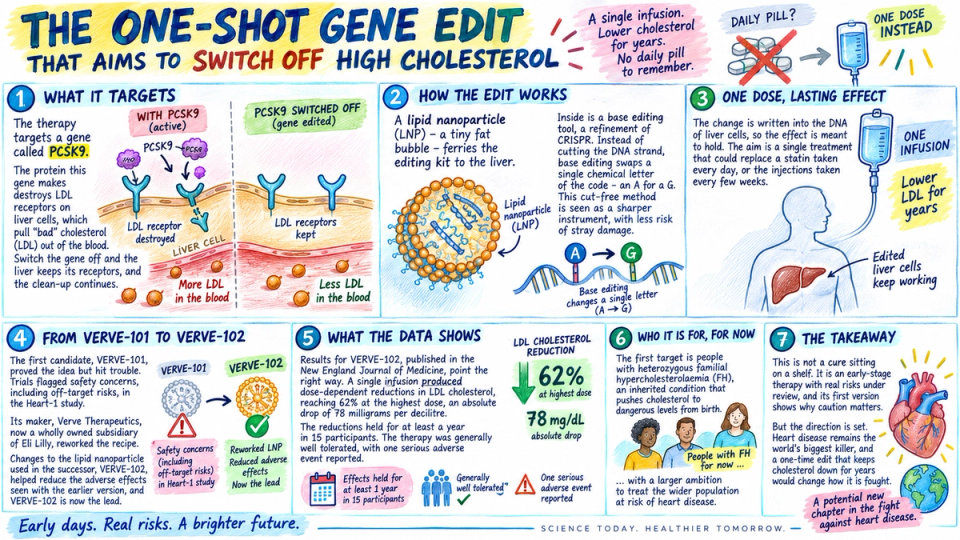
The therapy goes after a gene called PCSK9. The protein that gene makes destroys LDL receptors on liver cells, the same receptors that pull LDL, the "bad" cholesterol, out of the blood. Fewer receptors, more cholesterol left in circulation. Switch the gene off and the liver keeps its receptors, and the clean-up continues.
How the edit works
Delivery is by lipid nanoparticle, a tiny fat bubble that ferries the editing kit to the liver. Once there it uses base editing, a refinement of the gene-editing tool CRISPR. Where CRISPR cuts the DNA strand, base editing swaps a single chemical letter of the code, an A for a G. The cut-free method is seen as the sharper instrument, with less risk of stray damage.
One dose, lasting effect
Because the change is written into the DNA of liver cells, the effect is meant to hold. The aim is a single treatment that replaces a statin taken every day, or the injections taken every few weeks.
From VERVE-101 to VERVE-102
The first candidate, VERVE-101, proved the idea but hit trouble. Trials flagged safety concerns, including off-target risks, in the Heart-1 study. Its maker, Verve Therapeutics, now a wholly owned subsidiary of the drugmaker Eli Lilly, reworked the recipe. Changes to the lipid nanoparticle used in the successor, VERVE-102, helped reduce the adverse effects seen with the earlier version, and VERVE-102 is now the lead.
What the data shows
Results for VERVE-102, published in the New England Journal of Medicine, point the right way. A single infusion produced dose-dependent reductions in LDL cholesterol, reaching 62% at the highest dose, an absolute drop of 78 milligrams per decilitre. The reductions held across follow-up that ran at least a year in 15 participants. The therapy was generally well tolerated, with one serious adverse event reported.
Who it is for, for now
The first target is people with heterozygous familial hypercholesterolaemia, an inherited condition that pushes cholesterol to dangerous levels from birth. The larger ambition is bigger still: to treat the wider population at risk of heart disease.
Still in the lab
This is not a cure sitting on a shelf. It is an early-stage therapy with real risks under review, and its first version shows why caution matters. But the direction is set. Heart disease remains the world's biggest killer, and a one-time edit that keeps cholesterol down for years would change how it is fought.