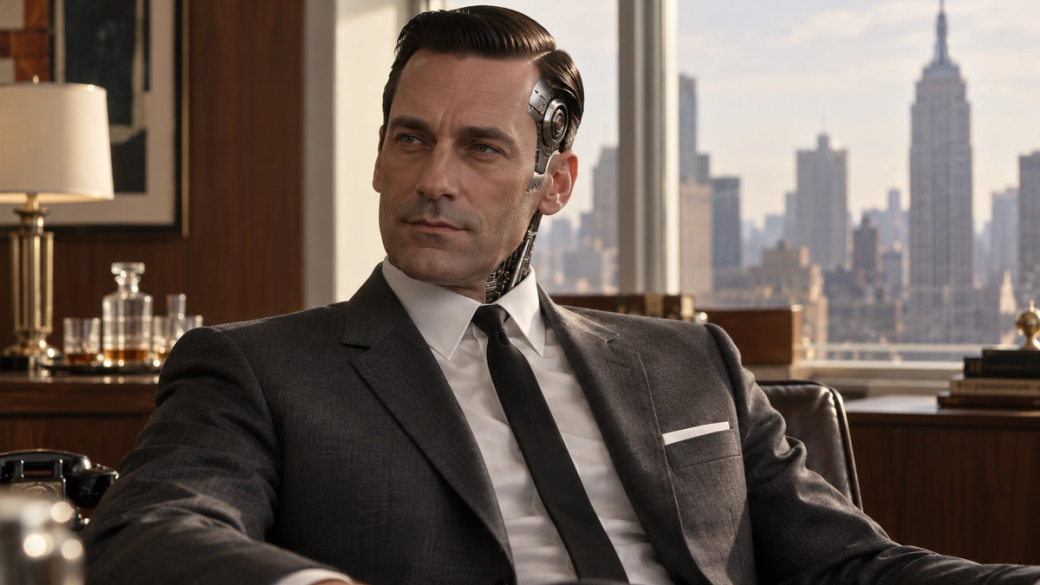
Don Draper, the fictional ad man who defined Madison Avenue's golden age, once said that advertising is based on one thing: happiness.
He did not say anything about a URL, an algorithm and zero human involvement, but then he had not met X Lift.
One URL, done
X, the social media platform formerly known as Twitter, has launched an AI tool that converts a single business web address into a complete advertising campaign, ready for review and deployment with nothing required from the advertiser beyond the cash to back the campaign.
The system generates image and copy options, assembles audience targeting and builds the campaign structure automatically.
In doing so, it compresses what would normally be a sequence of separate manual tasks into a single automated pipeline.
In the era before AI, the process involved copywriters (writing copy and headlines), art directors developing creatives, media planners targeting audiences and account managers negotiating bids.
X Lift .is trained on X's own advertising data, which the company says gives it an edge in optimising performance specifically for the platform.
And it sits on a revamped AI-powered ad stack that X rolled out in late April, designed to accelerate the pace at which it can ship new ad features.
It is not the first time X has taken a stab at advertising. Some of you will remember Prefill with Grok, trialled in February last year, which generated copy from a URL but left targeting and campaign assembly to the human.
X Lift removes the human from the loop almost entirely.
A trillion-dollar industry
Global advertising revenue reached $1.08 trillion in 2025, according to WPP Media, the media investment arm of the ad giant WPP, with 6.1% growth projected for 2026.
Automation could unblock that like a laxative, flushing out skilled roles, while siphoning off revenue to big tech.
A report from Forrester Research found that US advertising agencies will lose 32,000 jobs to automation by 2030, representing 7.5% of the total agency workforce, with generative AI accounting for nearly a third of those losses.
WPP chief executive Mark Read has acknowledged the direction of travel, admitting that "it's much easier to identify the jobs that AI will disrupt than it is to identify jobs that AI will create."
The roles most exposed are clerical and administrative positions, accounting for 28% of projected losses, followed by sales at 22% and market research at 18%.
Rebuilding
X is pitching X Lift at small businesses and first-time advertisers for whom the complexity of manual campaign setup has historically been a barrier, and it is working.
Active self-serve advertisers rose 50% in the third quarter compared with the same period a year earlier, a segment X is now targeting directly with simplified onboarding.
The irony is that X's ad business has spent three years recovering from its own self-inflicted wound.
Since Elon Musk's acquisition in 2022, a tranche of advertisers pulled back over platform changes and the owner's public statements.
EMarketer estimates global ad revenue on X came in at $2.26 billion in 2025, rising to an expected $2.46 billion this year, a fraction of what a platform with X's reach might otherwise command.
X Lift is, in part, a bet that automation can lower the barrier to entry sufficiently to compensate for the departure of the bigger brands.
Nobody is sitting out
It remains to be seen whether it works. But, if you stand back, X is probably a third or fourth mover.
TikTok and Meta expanded their AI creative tools at Advertising Week New York this week, with Meta widening access to its Ads Creative Studio, as platforms compete to keep the entire ad creation, testing and activation cycle inside their own walls.
WPP Media has noted that economic uncertainty is itself accelerating the adoption of AI tools in ad production and targeting, with Meta aiming to allow brands to fully create and target ads using its AI tools by the end of 2026.
Madison Avenue built empires on the distance between the client and the audience: the research, the insight, the craft, the mystique.
The platforms are methodically closing that gap to zero.
Don Draper sold the dream of the big idea. What X is selling is something far more prosaic: the end of needing one.