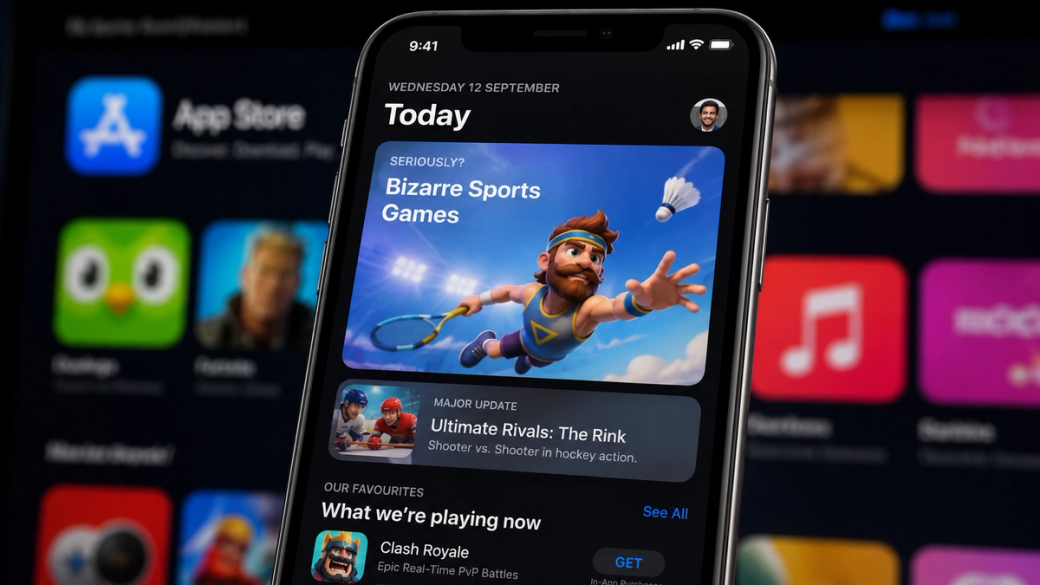
Apple announced that its App Store ecosystem facilitated $1.4 trillion in developer billings and sales in 2025, up from $1.3 trillion the previous year. The company released the figure, drawn from a study by Analysis Group economists, the day before WWDC kicks off.
The timing is not accidental. Apple publishes this study every year in early June, and the framing has become increasingly pointed as regulators in the US, EU and elsewhere continue to challenge the company's commission structure.
The 90% number is the headline Apple wants
Of the $1.4 trillion, more than 90% flowed to developers without any commission paid to Apple. The company has repeated this statistic in every iteration of the study since 2022, and the emphasis is deliberate.
The $1.4 trillion breaks down into three streams. Physical goods and services, meaning transactions through apps like Uber, DoorDash and Airbnb, accounted for $1.1 trillion. Digital goods and services, the category where Apple's 15% to 30% commission applies, totalled $149bn. In-app advertising revenue was $151bn.
Apple's commission applies to the smallest of the three buckets. The company wants regulators, judges and the public to understand that the App Store is primarily a facilitator of broader commerce, not a toll booth.
The AI growth signal
More than 40 of the top 100 apps on the App Store featured consumer-facing AI capabilities in 2025. Those apps recorded billing growth four times higher than the other top 100 apps.
Apple did not name the apps, but the category spans everything from ChatGPT and Claude to photo editors, productivity tools and health apps that have added AI features. The growth differential suggests that AI-enabled apps are pulling away from non-AI competitors in terms of revenue generation.
The figure also sets up Apple's WWDC announcements. The company is expected to deepen its AI integration across iOS, and demonstrating that AI apps are already thriving on the platform gives developers confidence that Apple Intelligence is a revenue driver, not a distraction.
The scale is hard to argue with
The App Store now draws 850 million average weekly users across 175 countries. The ecosystem has nearly tripled since 2019. Developers selling digital goods and services have earned more than $550bn on the platform since 2008.
Physical goods remain the dominant revenue stream, driven by grocery delivery, food pickup, general retail and travel. That growth is significant because it represents commerce that would exist without the App Store but flows through it because of the distribution and payment infrastructure Apple provides.
The real audience
Apple is talking to three audiences simultaneously. Developers, who need reassurance that the platform remains the best place to build a business. Regulators, who need to see that Apple's commission applies to a fraction of the total commerce the platform enables. And investors, who need evidence that the services business continues to grow.
The $1.4 trillion answers all three. Whether regulators in Brussels and Washington find it persuasive is another matter.