Colin Angle spent three decades teaching robots to clean your floors. Now he wants one to tell you to put your phone down and go for a walk.
The co-founder of iRobot, the company behind the Roomba, has unveiled his next product through a new venture called Familiar Machines and Magic. It is not a vacuum. It is a bear.
What the bear does
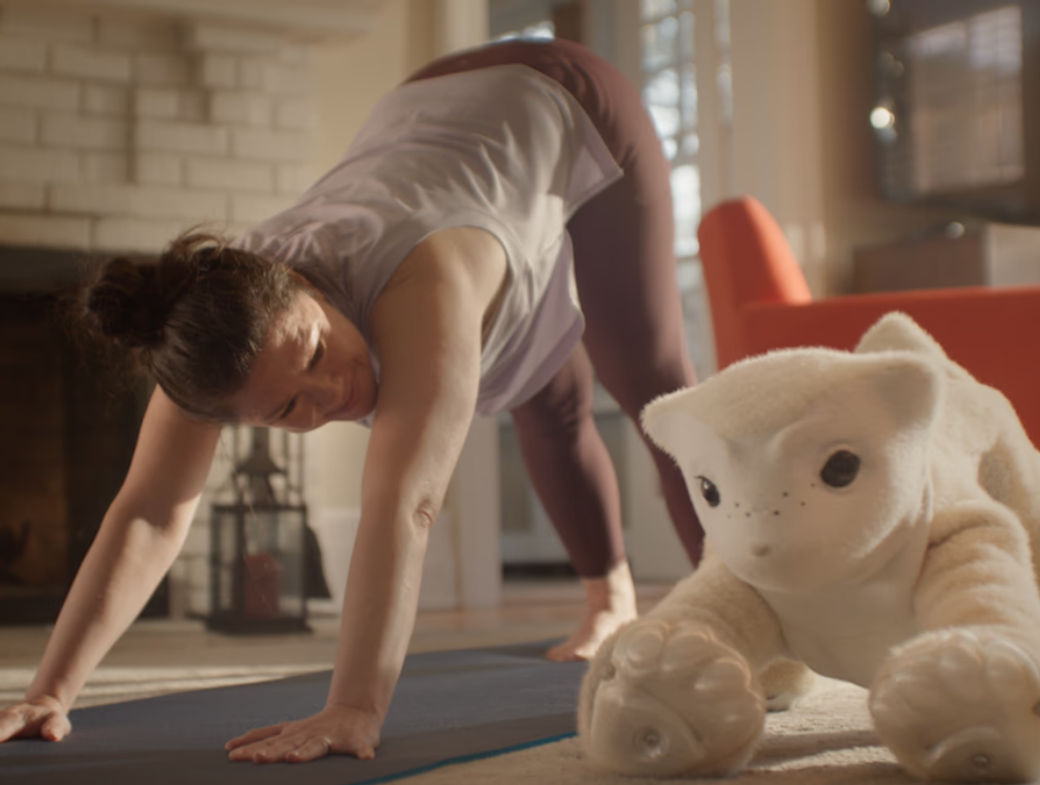
The robot is designed to look and move like a living creature, with 23 motorised joints that give it a range of physical expression closer to an animatronic puppet than a conventional robot. It is covered in a touch-sensitive coat, so it knows when you pet it. It has a vision system and microphone array, so it can see and hear what is happening around it.
Inside, a custom AI model gives the bear its own personality, memory and emotional responses. All of this runs on-device, with no data streamed to the cloud, a privacy-first decision that distinguishes it from every smart speaker and home assistant currently on the market.
The stated purpose is companionship with a behavioural nudge built in. The bear encourages healthy routines: putting your phone down, getting outside, breaking patterns. Think of it as a therapist crossed with a pet, wrapped in synthetic fur and powered by local AI inference.
Business case
Familiar Machines and Magic plans to launch sales next year at a price point the company describes as "comparable to owning a pet." That framing is deliberately vague. A goldfish costs a tenner. A Labrador costs thousands a year in food, insurance and vet bills. Where the bear falls on that spectrum will determine whether it is a mass-market product or a luxury curiosity.
The name of the company tells you something about Angle's ambitions. This is not pitched as a gadget. It is pitched as a relationship.
But, will they? Really?
Home companion robots have failed before, repeatedly. Sony's Aibo had a devoted following but never achieved meaningful scale. Jibo launched to great fanfare and shut down within two years. The social robotics graveyard is full of products that were technically impressive and emotionally unconvincing.
Angle's bet is that the AI has reached a threshold where a robot can sustain genuine emotional engagement over time, not through scripted responses but through persistent memory, adaptive personality and physical presence.
The privacy architecture is smart. Running everything locally eliminates the creepiness of a cloud-connected companion that records your conversations and sells the data. The touch-sensitive coat is a calculated design choice that invites physical interaction in a way that a screen or a speaker never can.
Whether people will bond with a robot bear the way they bond with a dog remains the unanswered question. Angle is betting his post-Roomba career that they will.
The bear, at least, will not chew the furniture.