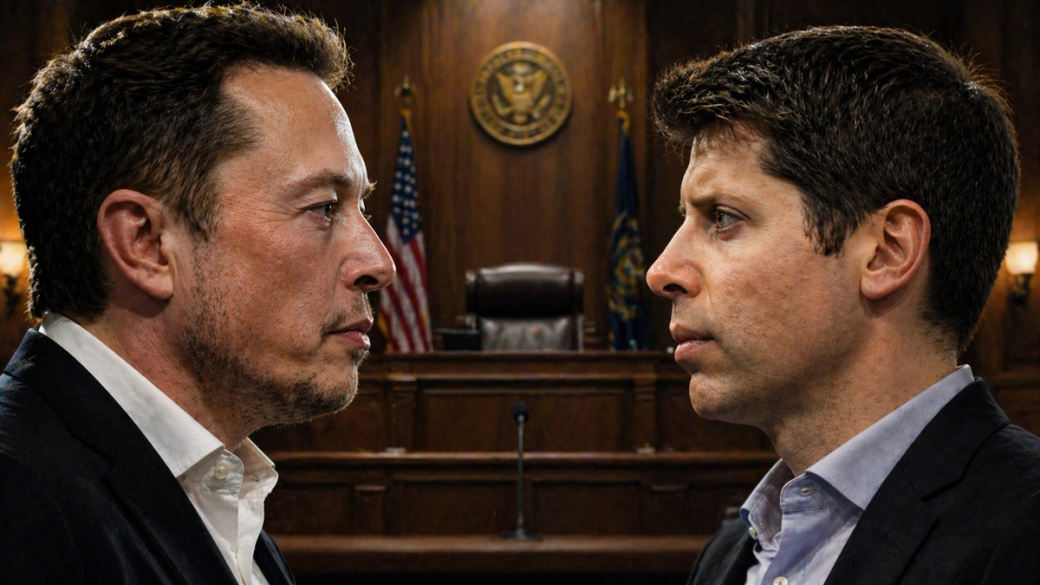
Sam Altman posted on X over the weekend that OpenAI is building a dedicated robotics division to develop humanoid robots for skilled labour and infrastructure work. Tesla shares fell 4.6% on Monday, erasing nearly $75bn of market capitalisation.
The timing invites the obvious reading. Altman and Musk's relationship has deteriorated from co-founders of OpenAI to litigants in a federal courtroom. Musk sued Altman over OpenAI's conversion from a nonprofit to a for-profit entity. Altman won the jury trial last month. Launching a robotics division that competes directly with Tesla's Optimus programme, weeks after that verdict, looks like a victory lap with a business plan attached.
That reading is not wrong. But it is incomplete.
The IPO logic
OpenAI is targeting a public listing as early as September at a valuation potentially above $1 trillion. A robotics division transforms the company's pitch to investors from "we build AI models" to "we build the physical systems that deploy AI in the real world."
Polymarket traders put the probability of an OpenAI IPO this year at 72%. The robotics announcement gives the S-1 a narrative that stretches beyond chatbots and coding agents into a multi-trillion-dollar addressable market for humanoid labour.
That is not a coincidence. It is pre-IPO positioning.
The proxy trade
Tesla's valuation has been inflated for years by investors who wanted AI exposure but had limited options. Tesla was the proxy: buy the car company, get the AI and robotics upside for free.
OpenAI going public with a robotics division gives investors a direct way to buy AI-native robotics exposure. The proxy trade weakens. Tesla loses a valuation premium it has carried for years, which explains why $75bn evaporated on an announcement that involved no product, no timeline and no revenue.
The technical bet
The division is led by Aditya Ramesh, the researcher behind DALL-E and Sora, and carries a "world simulation" mandate. OpenAI's approach is to train robot agents in synthetic environments rather than on real-world data, which is the method Tesla uses for Optimus.
The distinction matters. Tesla has a manufacturing head start. Optimus Gen 3 units are deployed in Tesla's own factories. The Fremont production line has been converted from Model S and Model X assembly to robot production, targeting a million units per year.
OpenAI has no hardware, no factory and no production experience. What it has is the most advanced generative AI research operation in the world and a co-design philosophy that develops hardware and machine learning models together rather than bolting AI onto an existing mechanical platform.
Whether that approach can close a manufacturing gap measured in years is the core question.
The rivalry is real but insufficient as explanation
Altman and Musk will continue to antagonise each other. The court victory, the robotics launch and the IPO race provide ample material. But reducing this to personal enmity misses the structural forces at work.
AI companies are moving into hardware because software margins compress and physical-world applications represent the next layer of value creation. OpenAI backed Figure AI and 1X Technologies before deciding to bring robotics in-house. The decision to reverse its 2020 exit from hardware reflects a market reality, not a grudge.
The grudge makes it more entertaining. The strategy makes it more consequential.