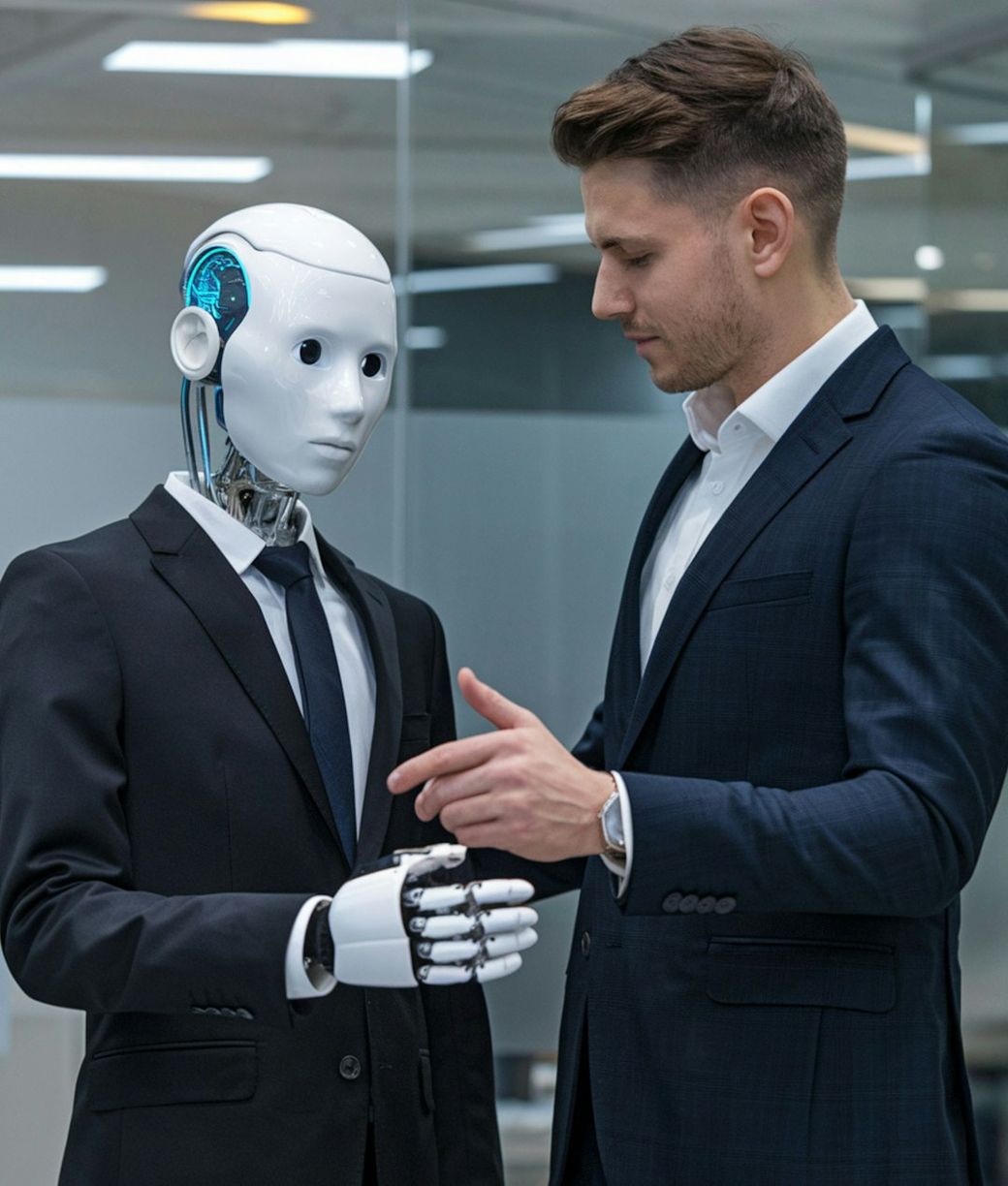
The people who will tell the world whether artificial intelligence is destroying jobs are increasingly on the payroll of the companies building it.
OpenAI is set to add the mathematician Jacob Tsimerman to its safety division, a hire he revealed at the press conference for his Fields Medal, the most prestigious award in mathematics.
It is one signing among many.
Google and Anthropic have hired three top economics professors since May, part of a concerted push by AI firms to recruit social scientists who can measure and explain the technology's effect on the labour market.
The trend looks benign, even responsible.
It is also a quiet transfer of authority over one of the era's most consequential questions from independent academia to the firms with the most to gain from the answer.
Why the companies want them
The appeal for the labs is easy to see, and they make the case openly.
Universities cannot compete on resources.
The companies can offer academics access to coveted data and immense computing power, alongside salaries and equity that few university posts can match.
For an economist trying to study how AI reshapes work, the richest data on how AI reshapes work sits inside these very companies, which makes the offer hard to refuse.
There is genuine intellectual value here.
Rigorous measurement of AI's labour effects is badly needed, and the firms have funded serious efforts, including Anthropic's economic index tracking how its Claude model is actually used at work.
The independence problem
The difficulty is what corporate patronage does to the research it pays for.
Critics warn that funding can steer academic agendas towards questions the sponsor finds congenial, and that tech employers have in some cases restricted the publication of internal findings.
That combination narrows the debate and erodes public trust at precisely the moment both are most needed.
The concern is not hypothetical.
When the body of evidence on whether AI costs jobs is produced largely by the companies selling AI, the temptation to accentuate the reassuring and bury the alarming is structural, not merely a matter of individual integrity.
Some hires do retain a foot in the independent world.
Chad Jones, one of Anthropic's recruits, was named this month to a Federal Reserve task force on AI while serving as an independent expert, a sign that the boundary between corporate and public roles is becoming porous rather than disappearing.
Duelling narratives
The stakes explain the recruitment, because the two sides of this argument are drifting apart, not converging.
On one side, the companies emphasise reassurance.
Anthropic's own research has found limited evidence that AI has affected employment so far, and Google has released a report concluding that AI is helping workers.
On the other, a growing chorus of economists is sounding the alarm.
Nearly 200 signatories, including 15 Nobel laureates, recently warned in an open letter that AI could transform the economy faster than the Industrial Revolution and demanded that institutions act now.
Anthropic's own chief executive has predicted AI could eliminate half of entry-level white-collar jobs, a forecast far starker than his company's measured research suggests.
The policy vacuum this fills
The battle over evidence matters because policymakers are frozen without it.
Molly Kinder captured the paralysis, describing a "fog of war" that has left lawmakers reluctant to act without clearer proof of harm.
That fog is not neutral ground.
In the absence of independent data, whoever controls the most authoritative research effectively sets the terms of the debate, and the companies are spending heavily to occupy that position.
The public is already primed to worry.
A nonprofit poll found 49% of Americans are very concerned about AI's economic role, and the labs have responded with conspicuous generosity, including hundreds of millions of dollars in pledges to ease the coming transition.
Those commitments are real, and may do real good.
But they sit alongside a subtler investment, in the researchers, the datasets and ultimately the narrative that will shape whether governments ever conclude the labs need restraining at all.
The economists being hired are among the best in their field.
The question is whether, once inside, they will still be free to reach conclusions their employers would rather not hear.