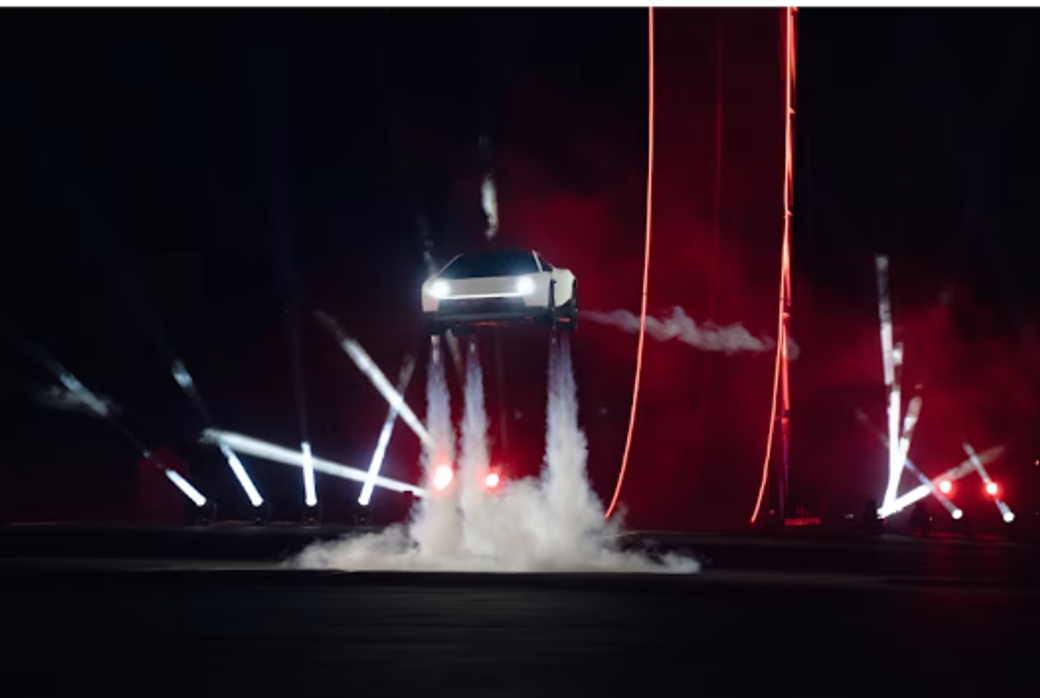
A Wall Street note published Friday has put an 80% probability on Tesla and SpaceX merging by the end of 2027, after the electric carmaker's new Roadster performed a thruster-powered leap over five moving vehicles at SpaceX's McGregor test site in Texas on Thursday night.
Analysts at Yorkville Ives, the equity research firm behind the widely followed Dan Ives technology coverage, said the demonstration was a tangible illustration of the two Elon Musk companies operating as a single engineering platform.
The Roadster's attitude-control thrusters, pressure vessels, and control hardware were all developed at SpaceX, the rocket company, and now sit on a Tesla product.
AI crossover
Yorkville Ives cited strategic artificial intelligence and data-driven reasons for its merger call, though it stopped short of elaborating in detail.
The firm maintained its Outperform rating and $500 price target on Tesla shares, which closed Thursday at $362.44, and said the setup going into third-quarter earnings on 21 October was unchanged.
It views Tesla as a physical AI platform with a vehicle business underneath it, with roughly two-thirds of that $500 target attributable to autonomy, robotaxi operations, and Optimus, the company's humanoid robot programme.
Last human-driven car?
On that reading, the Roadster matters less as a revenue driver than as a signal: Musk called it "the best of the last of the human-driven cars," a framing Yorkville Ives read as Tesla declaring the human-driven car a legacy category while every other vehicle in its lineup is built autonomy-first.
Production is due in 2028, volumes are expected to be limited, and Tesla has not disclosed pricing.
The Cybercab rollout, Full Self-Driving attach rates, and Optimus progress remain the metrics the firm will watch most closely in next week's print.