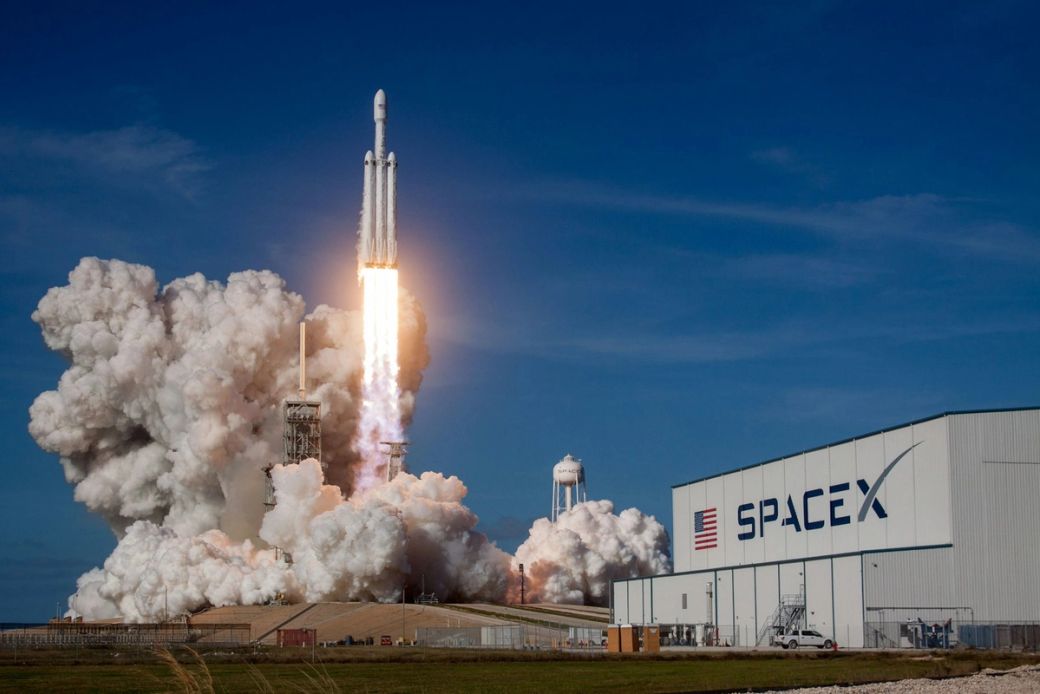
SpaceX filed its first earnings report as a public company on Tuesday (Aug 4) and the numbers do not describe a space business.
The group spent $15.8 billion on artificial intelligence over the period. Space and connectivity accounted for slightly more than $1 billion.
Some would say this reveals a different company from the one most investors thought they were buying.
The entity now contains xAI and the X platform, and the AI spending reflects data centre commitments that dominate the balance sheet.
Some of this is defensible. The Colossus supercomputer looks like a genuinely good call, because demand for capacity is enormous and the buyers include Anthropic and OpenAI. Being the picks and shovels vendor in a gold rush is a real business.
Starlink, meanwhile, remains the only part of the operation that reliably makes money.
Which brings us to the ambition that may worry the average shareholder.
The company has made clear it wants to compete with AT&T, Verizon and T-Mobile, and the persistent rumour is that Elon Musk would like to buy one of them outright.
Telecoms is where outsiders (particularly those with Dunning Kruger Syndrome) go to be humbled.
The fixed costs are enormous, the physical plant is unavoidable, the incumbents lobby ferociously, and the technical constraints are stubborn: satellite signals are defeated by trees and buildings, which is to say by cities and suburbs.
The proposal that Starlink dishes could act as repeaters in a mesh network requires new hardware in millions of homes and a constellation that deorbits and must be continually replaced.
History is unambiguous here. Successful telecoms disruption has always required a technology that produces a genuinely lower cost base, allowing the challenger to cut prices and take share.
Sprint tried it with digital. Charlie Ergen tried it with open hardware and Open RAN, betting that openness would undercut Verizon, and ended in bankruptcy.
Satellites that must be replaced every few years are the opposite of a lower cost base.
Nobody with fibre running into their house is switching to space, and the customers who genuinely need Starlink are, by definition, in places where there are not many of them.
None of this makes SpaceX a bad company. The rockets work, and Starlink is a fine business serving a real gap.
It makes it a mispriced one.
Add an advertising platform in visible decline, whose product chief has just left after a year that included an AI assistant producing content nobody wants to defend, and the picture sharpens further.
Investors bought a space company at the IPO.
What they own is a data centre supplier, a satellite internet provider and a social network, and the largest line item on the page belongs to none of the three.