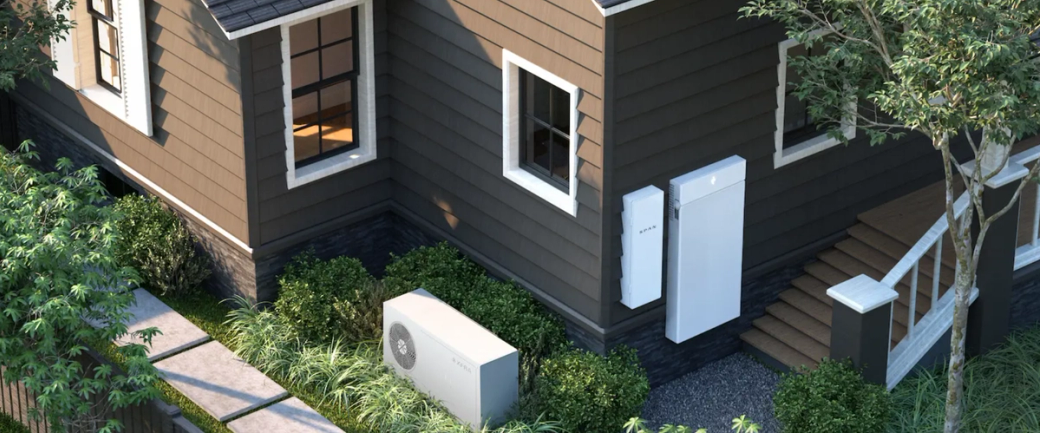
A start-up called Span has partnered with Nvidia on a concept that sounds like science fiction but addresses a problem that is very real: installing small, liquid-cooled AI data centres outside ordinary homes and businesses.
Each unit runs on Nvidia's RTX Pro 6000 Blackwell GPUs, cooled by liquid rather than fans, which means they operate near-silently. The idea is to distribute computing power across thousands of residential locations rather than concentrating it in warehouse-scale facilities that take years to build and consume enough electricity to power a small city.
The maths behind the pitch
Span claims it can deploy 8,000 of these units six times faster and at one fifth the cost of building a comparable 100-megawatt data centre. The key insight is that most homes and small businesses have unused electrical capacity on their local grid connection. Rather than fighting for grid approval to build a new facility, Span wants to aggregate that idle capacity across thousands of sites.
The demand is not theoretical. US data centres consumed more than 4% of the country's electricity in 2024, a figure that could more than double by 2030 as AI workloads scale. Traditional data centres can take over a decade to build and frequently stall at the grid-approval stage, where utilities and regulators struggle to allocate the power these facilities need.
Span is trying to sidestep that particular bottleneck entirely.
What homeowners get
Residents who host a unit receive a premium smart electrical panel, battery backup, and discounted rates on electricity and internet. The proposition is that your home gains backup power and cheaper bills in exchange for hosting a box on your property that runs AI workloads for corporate customers.
Span is already working with one of America's largest homebuilders to test the system in new housing communities, where the units can be designed into developments from the start rather than retrofitted into existing neighbourhoods.
The questions that remain
The technical concept is sound. Distributed computing is well understood, and liquid cooling has advanced to the point where silent operation in a residential setting is plausible.
The social question is harder. Homeowners may welcome cheaper electricity and battery backup. They may be less enthusiastic about an AI server humming next to the garage, regardless of how quiet it is. Planning regulations, homeowner association rules and insurance implications are all unknowns.
There is also the question of latency and reliability. Workloads distributed across thousands of residential sites behave differently from those running in a purpose-built facility with redundant power and cooling.
Span's pitch is that the energy crisis facing AI infrastructure is too urgent to wait for traditional solutions. That may be true. Whether the answer is turning suburban streets into distributed server farms is a question the neighbours will have strong views on.