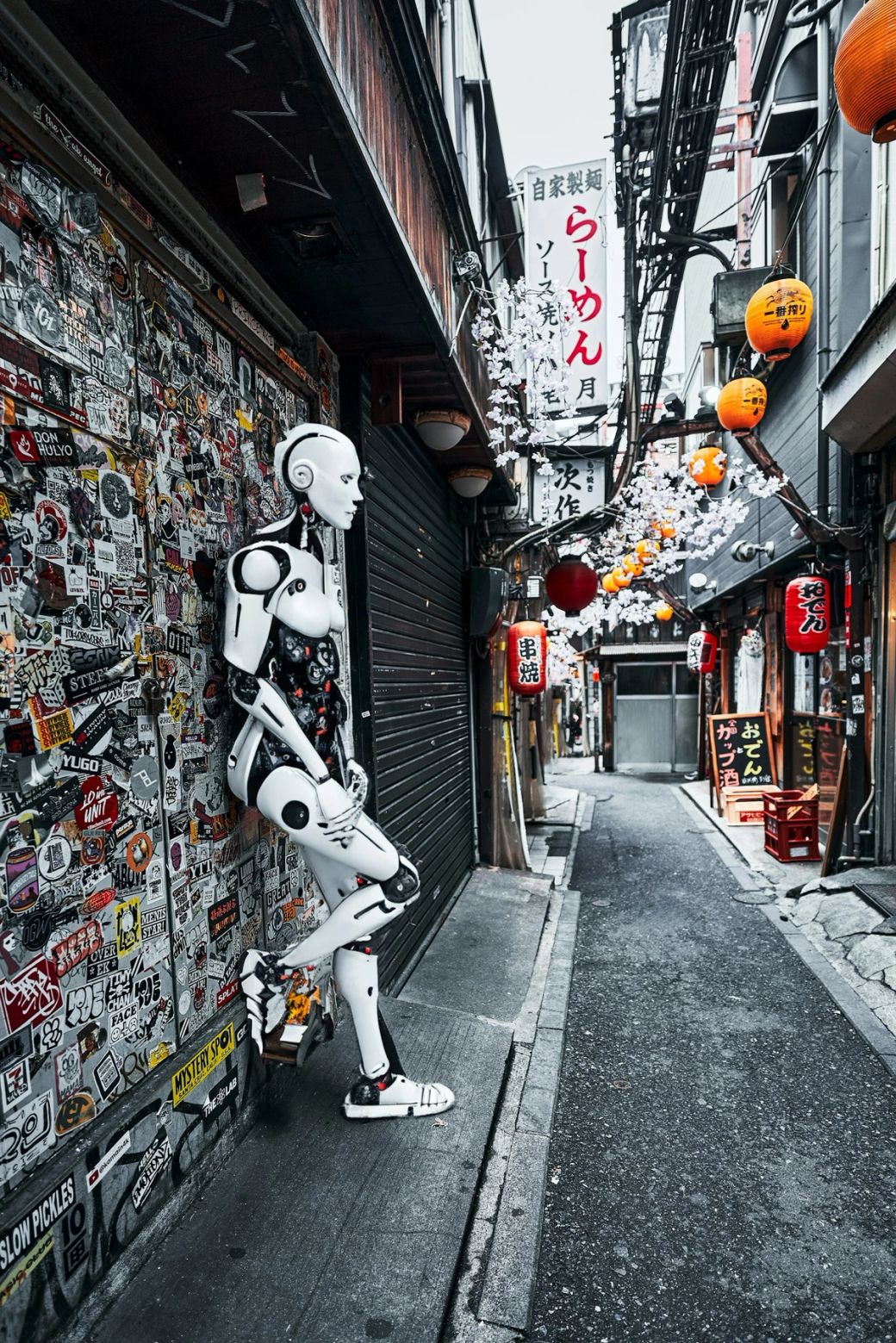
Japan is to buy 27,500 of Nvidia's next-generation Rubin processors to build a homegrown artificial intelligence model for robots.
The purchase will be led by Noetra Corp, a newly created company that has been awarded ¥387.3 billion ($2.4 billion) in government funding to build a large-scale data centre, expected to be operational by March next year.
Alongside the Rubin graphics processing units, the facility will house 13,750 Vera central processing units and deliver 140 megawatts of data centre capacity, built on Nvidia's DSX platform.
The site will use Vera Rubin NVL72 racks and Spectrum-X Ethernet networking.
Nvidia, the US chipmaker that dominates the market for AI training hardware, unveiled the Vera Rubin design at the CES trade show in January.
Each superchip pairs one Vera CPU with two Rubin GPUs, and the company has pitched the platform at agentic AI, advanced reasoning and mixture-of-experts models.
The computing capacity will underpin the FRONTia Project, an initiative launched by Japan's Ministry of Economy, Trade and Industry to develop multimodal foundation models for AI robotics and so-called physical AI, meaning systems that operate machinery in the real world rather than generating text or images.
Collaborators include SoftBank, NEC and Preferred Networks, the AI developer backed by Toyota Motor.
Pretrained weights from Noetra's models, the numerical parameters that determine how a model behaves, will be made broadly available to domestic developers and companies, alongside Nvidia software including its Nemotron, Cosmos and Isaac GR00T open models.
The resulting systems are intended to support AI agents, digital twins and robotics platforms across manufacturing, logistics, healthcare and telecommunications.
Japan views robotics as a response to an ageing population and a shrinking workforce.
The government wants domestic companies to take more than 30% of a global robotics market it projects at ¥60 trillion ($370 billion) by 2040.
The push also reflects a wider aim of reducing dependence on foreign technology suppliers, a concern framed in Tokyo in national security terms.
"Japan invented modern manufacturing," said Jensen Huang, Nvidia's founder and chief executive. "Now, it is building the AI factories that will power the next industrial revolution."
The deal extends Nvidia's growing list of state-backed infrastructure projects, following a record 35 new AI supercomputers announced across Europe last month.