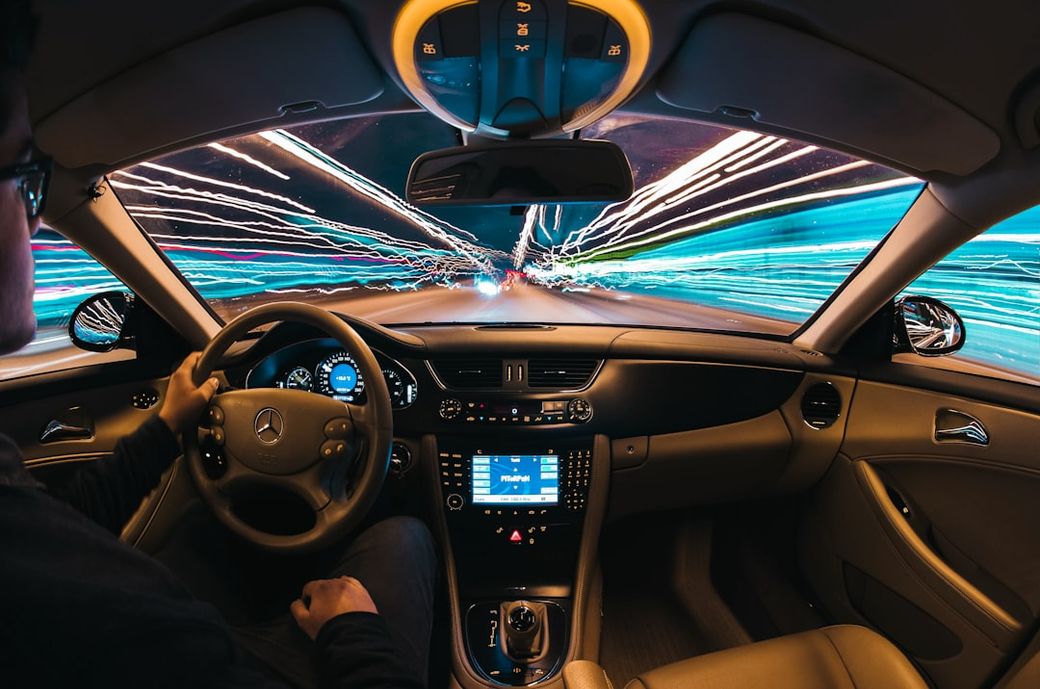
Wayve engineers arrived in Detroit quietly earlier this year with a mission. Within weeks they had a Jeep Grand Cherokee driving itself through Motor City suburbs. Within months Stellantis, Jeep's parent, took investors on test rides and committed to rolling the technology across America. The speed matters. It signals that Wayve is not chasing Waymo's path or Tesla's. It is carving a third route.
Waymo spent a decade building robotaxis from the ground up, operating the vehicles and the service. It is capital intensive, geographically constrained, and vertically integrated.
Tesla bundles autonomous driving directly into the car and handles software updates from California. It creates lock-in but limits scale beyond Tesla's own production. Wayve is doing neither. It is selling its AI driving software directly to automakers and fleets, letting them deploy it across vehicle types, hardware configurations, and geographies without Wayve controlling the end product.
This is why Stellantis moved so fast. Wayve showed up with a proven technology stack that ran on the hardware Stellantis already had. No need to redesign. No need to commit to proprietary sensors or compute platforms. Jeep got hands-off driving. Stellantis got a feature it can sell across its global brands. Wayve got a production contract. Everyone moved.
The technology bet
Wayve's core claim is that end-to-end AI, trained on globally diverse driving data, can generalize across any vehicle without city-by-city fine-tuning or detailed HD maps. This is contrarian. Waymo built hand-coded rule systems and relied on mapping. Tesla trains on fleet data but ties the system to Tesla's sensors and compute. Wayve trained its foundation model on driving data from over 70 countries and claims it can operate across different sensors, different chips, different vehicles.
The proof point came last year. Wayve conducted trials in over 500 cities in Europe, North America and Japan without city-specific programming. Zero-shot driving in hundreds of cities using a single model. Waymo would require months of engineering and mapping for each new city. Wayve drove it fresh.
That technical edge is why the chip vendors backed it. AMD, Arm, and Qualcomm all invested in the latest extension of Wayve's Series D. They are not betting on a company. They are betting on a platform that can run on their silicon without being locked to any single vendor. This is strategic for them. It means automakers can deploy Wayve without being forced to a particular compute stack. That flexibility is worth $60m to the chip industry.
The business model inversion
Wayve is not building autonomous vehicles. It is licensing its AI Driver to companies that do. Nissan will integrate it into its ProPilot system starting 2027. Stellantis will use it across Jeep, Dodge, Chrysler, and Ram. Uber will deploy it in L4 robotaxis. Mercedes-Benz backed the round and is developing both consumer and robotaxi applications.
This model scales differently than Waymo or Tesla. Waymo's value is tied to robotaxi utilisation rates in specific cities. Tesla's value is tied to new vehicle sales. Wayve's value is tied to licensing agreements with every OEM that can deploy its software. The addressable market is not one company's vehicle production. It is every vehicle.
CEO Alex Kendall framed it sharply: "Autonomy will not scale through city-by-city robotaxi deployments alone. It will scale through a trusted platform that automakers and fleets can deploy globally and improve continuously."
The timeline and the stakes
London robotaxis are launching later this year with Uber. US deployment of Wayve-powered hands-off driving in Stellantis vehicles is scheduled for 2028. Consumer vehicles with Level 2+ capability start rolling out next year. Wayve has $1.5bn in funding at an $8.6bn valuation. Uber committed an additional $300m in milestone-based funding for the robotaxi rollout.
The company is planning to list. It filed a prospectus with federal authorities this week, marking the start of what could be one of Europe's most valuable AI-software IPOs.
What this means
Wayve is betting that the future of autonomous driving is not Waymo's city-by-city robotaxi empire or Tesla's integrated vertical stack. It is a distributed software layer that runs on any automaker's platform, controlled by anyone who wants to use it. No mapping dependency. No vendor lock-in. Hardware-agnostic.
If that works, Wayve's TAM is not one company's vehicle volume. It is every vehicle. That is why the chip vendors backed it. That is why three automakers participated in the funding. That is why Stellantis moved fast.
The secret mission to Detroit was not about impressing Jeep. It was about proving that Wayve's software could integrate faster than anyone expected. Detroit saw it work. Now Wayve is scaling it.