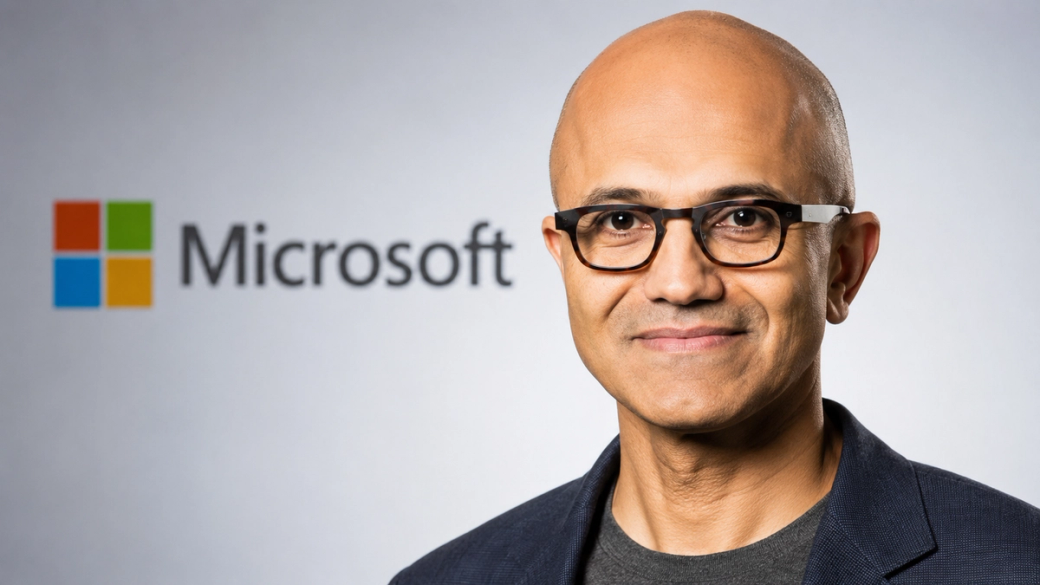
There is a particular kind of warning that carries more weight for who delivers it than for what it says. Satya Nadella warning about AI monopolies is one of them.
Microsoft's chief executive told The Wall Street Journal that people will not accept a handful of companies "doing all of the learning for the world." He is right. He is also the head of a company that has spent a decade attracting antitrust attention.
The argument itself is sound
Strip away the source and the point holds. Nadella frames the danger as bigger than ordinary market concentration.
He argues that companies cannot answer job displacement by centralising compute and data. Treating the upheaval as a reason to, in his words, "use all the power to build data centers" risks turning scale into coercion. He called that outcome potentially weaponizable.
That is a serious claim, and a correct one. Whoever controls the compute and the data controls the learning, and control on that scale stops being a commercial advantage and becomes leverage over everyone downstream.
Now look at who is saying it
This is the part that earns the raised eyebrow. Microsoft is not a bystander to AI concentration. It is one of its main architects.
The company holds a vast stake in OpenAI. It runs Azure, one of the few platforms with the compute to train frontier models. It has the data, the capital and the data-centre build-out that the warning describes. If a small group of firms ends up doing the world's learning, Microsoft is on the shortlist.
It is also a repeat subject of competition scrutiny, from the browser wars of the 1990s to current questions about its cloud and AI positions. A monopoly warning from this address invites a question about motive.
What the framing achieves
There is a strategy in being the one to name the risk. Stake out the high ground on concentration and you shape the debate before regulators do.
Nadella can warn against weaponized scale while his company assembles exactly the scale in question. The warning is not insincere. It is positioning. A firm that defines the danger gets to argue it is not the danger.
Why the point survives the messenger
None of this makes the argument wrong. The risk of a few companies owning the world's learning is real, and it deserves the attention.
The lesson is to watch the build-out, not the speeches. Nadella has described the trap with precision. The useful question is whether his own company is walking into it, or laying it.