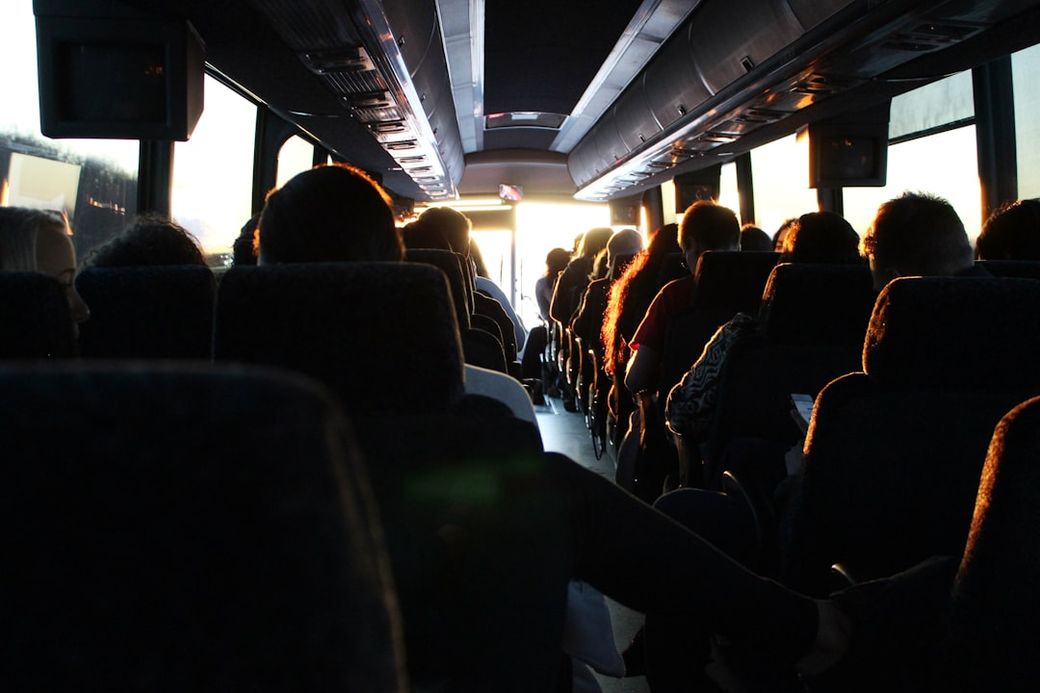
Google's commuter shuttle programme began in the early 2000s when product manager Cari Spivack tested a two-stop bus route after co-founder Larry Page told her to find a way to reduce traffic and emissions on the highway between San Francisco and Mountain View.
"We're all leaving at the same time going to the same place on the same road," Spivack said. "I thought there has to be a better way."
The solution was simple, sensible and completely unprepared for what it would become.
From carpool to flashpoint
By the mid-2010s, hundreds of privately operated shuttles run by Google, Facebook, Apple and other tech companies were carrying roughly 10,000 workers a day through San Francisco's residential streets. The coaches were large, branded and used public bus stops, displacing Muni passengers and blocking traffic.
For residents watching their rents double while unmarked luxury coaches idled outside their apartments, the shuttles became a physical manifestation of displacement. The buses were not causing gentrification. But they were the most visible evidence of it, rolling through neighbourhoods on a schedule that matched the workday of people who could afford to live where others could not.
Data standoff
The city's Municipal Transportation Agency tried to coordinate. It asked the companies for schedules and routes so it could manage traffic flow and protect Muni service. The companies' government relations teams mostly refused to share the information.
The refusal was revealing. These were companies that built their businesses on data, that preached transparency and openness as corporate values, that employed thousands of people whose job was to organise the world's information and make it accessible. They would not tell the city where their buses were going.
A confrontational meeting with transportation official Gillian Gillett forced the issue. She demanded the companies send engineers and planners rather than lobbyists. Mayor Ed Lee pushed the firms back to the table after street protests escalated.
Performative backlash
Collectives like Heart of the City staged theatrical blockades, standing in front of the buses and turning each confrontation into a media event. The protests were designed to be photographed, and they were.
The effect was to transform a transport logistics dispute into a cultural symbol. The Google Bus became shorthand for an entire critique of the technology industry's relationship with the city it occupied: extractive, oblivious and literally driving through on its way to somewhere else.
What it meant
The shuttle programme was good transport policy. Fewer cars, lower emissions, reduced congestion. The problem was never the buses. It was the asymmetry they represented: private infrastructure for a private workforce, using public space without public accountability.
Tech companies built their own transit system because the public one did not serve them. That decision, repeated across housing, schooling and healthcare, is the story of Silicon Valley's relationship with the Bay Area condensed into a single image: a large white coach with tinted windows, pulling away from a public bus stop, carrying people who could afford to live anywhere to a campus most residents would never see.