Newcleo announced on May 27, 2026 that it would merge with NewHold Investment Corp III, a Nasdaq-listed acquisition vehicle, in a deal that values the Franco-Italian nuclear company at $2.4 billion and delivers up to $429 million in gross proceeds. The timing was precise. Two days earlier, Newcleo secured a US Department of Energy contract to convert excess American plutonium into fuel for advanced reactors, positioning the company as a critical supplier for the US government's nuclear expansion.
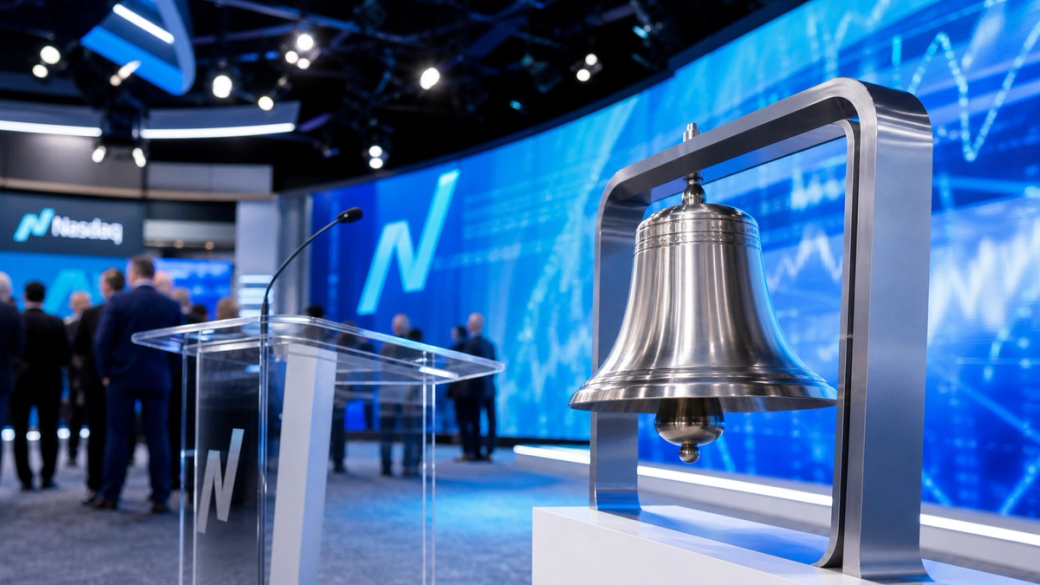
The SPAC route bypasses traditional IPO roadshows. Newcleo will deliver $209 million from NewHold's trust account and raise $220 million from a committed PIPE, or private investment in public equity, oversubscribed with new strategic and institutional investors. The merger is expected to close in the second half of 2026 pending SEC approval. The company will trade on Nasdaq under the ticker NWCL.
The deal arrives in the middle of a broader SPAC resurgence. Through late June 2026, 116 SPAC IPOs raised $22.7 billion, following 144 SPACs in 2025 that raised $30.4 billion, the highest annual total since the 2021 peak. Currently, 251 SPACs are actively searching for acquisition targets. The market has matured. The SEC tightened SPAC regulations in 2024, eliminating safe harbors that once shielded forward-looking projections from liability and bringing disclosure standards closer to traditional IPOs.
But the resurgence reflects a structural reality. The mega-IPO wave—SpaceX at $1.8 trillion, Anthropic and OpenAI to follow—is consuming investor capital and analyst attention. For smaller issuers, particularly in capital-intensive sectors like nuclear energy and clean tech, SPACs provide a "side entrance" to public markets. Nuclear startups face a particular challenge. Traditional IPOs price risk based on historical earnings and near-term cash flows. Nuclear reactor developers have neither. A SPAC allows them to share forward-looking financial projections that a traditional IPO prospectus would restrict.
Newcleo is not alone in choosing this path. Oklo and NuScale, both advanced reactor developers, went public via SPAC transactions. Solidstate battery startup Factorial Energy went public via SPAC in June 2026. Controlled Thermal Resources, a lithium extraction and geothermal power company, is planning a SPAC deal valuing it at $4.7 billion in the second half of 2026.
The alternative route—traditional IPOs—is reserved for companies with clearer near-term revenue models. Fervo Energy, a geothermal power producer, raised $1.9 billion in an IPO in May 2026. X-energy, a small modular reactor manufacturer, raised over $1 billion in an April IPO. But X-energy's stock has fallen 38 percent since its debut, suggesting investor skepticism about revenue timelines for companies still years away from commercial deployment.
Newcleo founder Stefano Buono, an Italian physicist who previously took his medical venture AAA public on Nasdaq before its $4 billion acquisition by Novartis, said he had "the Nasdaq listing in mind even before founding Newcleo." The company raised $780 million in private capital since its 2021 founding while remaining unprofitable. Auditors warned of a potential liquidity crisis in August 2025. The SPAC deal, combined with the government plutonium contract, provides both capital and strategic validation.
The SPAC market has bifurcated. Experienced sponsors with track records are accessing the best deal flow and better economics. New entrants face smaller, less attractive targets. For nuclear and clean tech, the sector concentration is clear: nuclear energy represents roughly half of all sustainable-themed SPACs. That reflects government policy, data center power demand, and capital requirements that exceed traditional venture funding.
The question remains whether advanced nuclear companies can deliver returns. Until they operate commercially, SPACs offer the only path to public capital. Success depends on whether the technology works on time and on cost.