Meituan released LongCat-2.0 on June 30, 2026, an open-source large language model with 1.6 trillion parameters trained entirely on domestically produced Chinese chips. The release represents a significant milestone in China's effort to reduce dependence on US technology for frontier AI development.
The model features a 1 million-token context window and uses a Mixture-of-Experts architecture that dynamically activates between 33 billion and 56 billion parameters per token, making it computationally efficient despite its massive scale. Meituan claims LongCat-2.0 was the first trillion-parameter model to complete full-process training and inference on a 50,000-card domestic computing-power cluster.
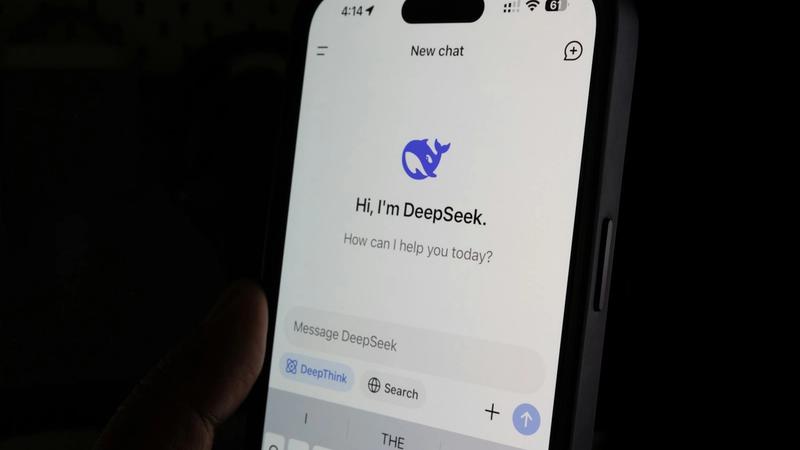
The distinction from competitors is critical. DeepSeek's V4-pro, which launched in April and operates at similar scale, relied on domestic Chinese chips only for inference—the process where a trained model answers user queries. DeepSeek used foreign hardware for pre-training, the far more computationally intensive phase where models digest massive datasets to learn underlying patterns. LongCat-2.0 used Chinese hardware for both phases.
Meituan did not explicitly name its chip supplier but indicated it used Huawei Collective Communication Library software to improve training stability, suggesting the underlying processors are Huawei-based ASICs (application-specific integrated circuits). The cluster spans between 50,000 and 60,000 AI chips, one of the largest known AI training runs completed without any NVIDIA hardware.
The release carries geopolitical weight. US export controls have systematically restricted Chinese access to cutting-edge AI chips since late 2022. LongCat-2.0 demonstrates that despite those restrictions, China can now execute frontier-scale model training on alternative hardware. The model is open-sourced under the MIT license, making it available for enterprise and commercial use without the legal restrictions of copyleft licenses.
Notably, LongCat-2.0 was previously circulating on OpenRouter, the inference platform, under the anonymous name "Owl Alpha." In that form, it accumulated 10.1 trillion tokens monthly at peak usage, ranking it in the top three models globally on the platform and securing first place on the Hermes Agent workspace. The unbranded version demonstrated sufficient quality that global developers were already relying on it before Meituan's public claim.
The timing reflects Meituan's broader strategic shift. The company, best known as a food delivery and on-demand services giant, committed to investing billions in AI and domestic chip capabilities as it faces margin compression in its core logistics business. The company released LongCat-Flash, a 560-billion-parameter model, in September 2025, followed by LongCat-Next, a multimodal variant, in March 2026.
By open-sourcing LongCat-2.0, Meituan signals ambition to become a foundational player in global AI infrastructure rather than remaining a regional tech company. The move also challenges the notion that US export controls are effectively slowing China's frontier-AI progress. For enterprise customers, the release offers access to a competitive agentic coding model at significantly lower cost than proprietary Western alternatives.