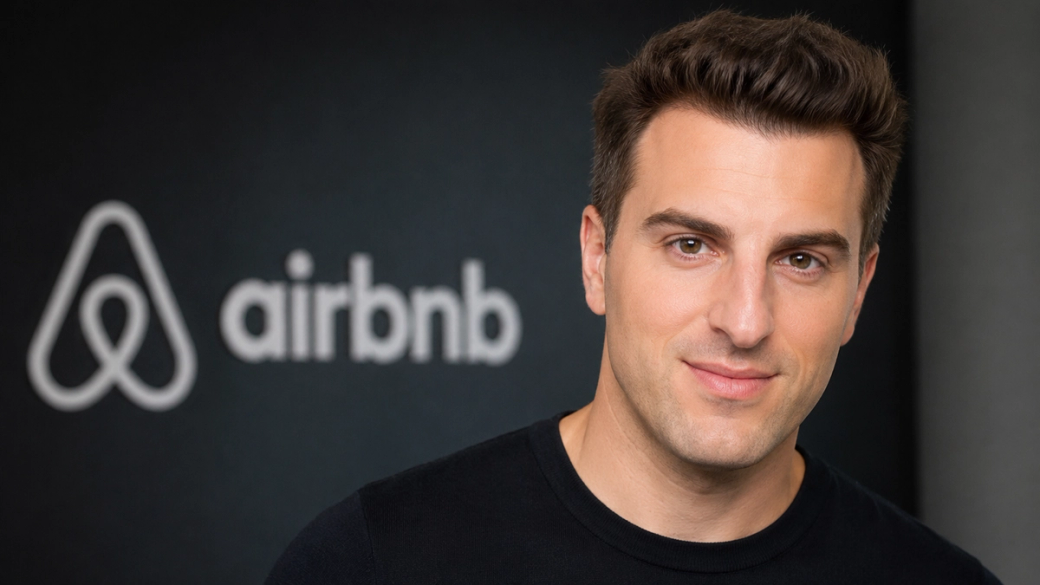
Brian Chesky is building an AI lab outside Airbnb, financed in part by his own capital and outside investors, and structured to operate independently from the company. The move directly contradicts the repeated assurances he has given Wall Street that Airbnb will not build proprietary models, train at scale or undertake the kind of visible GPU buildouts and capital expenditure that characterise the current AI arms race.
The timing is deliberate. Three weeks after Airbnb's most recent earnings call, where Chesky reinforced the company's position as an applications layer using commodity AI models, the lab announcement creates a public rupture between his stated investor strategy and his personal wager on frontier model development.
The contrast with peer spending is stark. Meta has guided capital expenditure of $125bn to $145bn for 2026. Alphabet is targeting $180bn to $190bn, with 2027 expected to be higher. Microsoft is on track for roughly $190bn this year. These are companies betting the farm on AI infrastructure and proprietary capability.
Airbnb's public position is that this bet is someone else's problem. The company will use whatever models are available in the market and build applications on top of them. That strategy is defensible if the best models remain accessible to anyone willing to pay for API access. It becomes indefensible if access tightens, capability concentrates, or the advantage of having a proprietary model trained on your own data becomes too large to ignore.
Chesky's lab is an insurance policy against that scenario. If commodity models become insufficient, Airbnb already has the infrastructure and team to build its own. If they remain sufficient, the lab costs him personal capital and the opportunity cost of his time, not shareholder value.
Meta lesson
The framing matters because Chesky has learned what Meta discovered during the metaverse episode. The market punishes visible bets on uncertain technologies far more severely than it punishes failures on unannounced projects.
Meta invested tens of billions in metaverse development while publicly discussing the bet to investors, regulators and the public. Every quarter, the company reported Reality Labs losses. Every conversation with Wall Street included metaverse discussion. The bet became impossible to retreat from quietly. When the strategy proved less valuable than anticipated, the losses were visible and cumulative.
Chesky's approach is different. The lab exists. He is making a real bet. But it is separate from Airbnb's reported financials and investor guidance. If the lab fails, it fails without materially affecting the company's earnings or requiring explanation to shareholders.
If it succeeds, Airbnb has optionality it did not have before.
Strategic tension
The contradiction between Chesky's investor pitch and his personal actions reflects genuine uncertainty about how the AI market will develop. He is hedging by maintaining both positions: the public narrative that commodity models are sufficient, and the private bet that proprietary models matter.
That hedge is rational but unsustainable. Eventually, the market will force a choice. If Airbnb's business needs proprietary models, saying otherwise to investors becomes a problem. If it does not, Chesky's lab is a vanity project.
The disclosure suggests he believes the first scenario is more likely. He just does not want Wall Street to price it in yet.