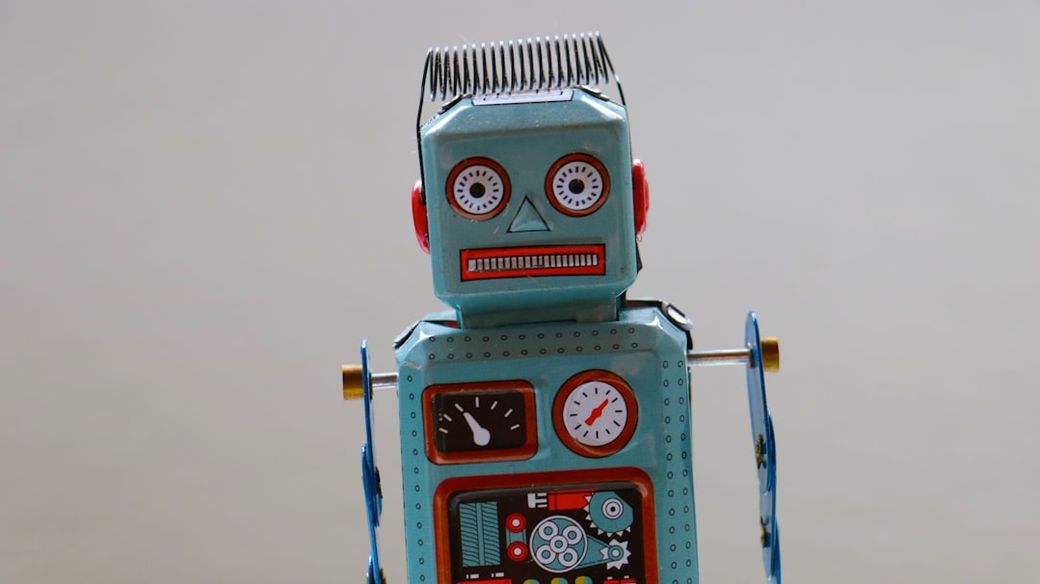
A cluster of AI breakthroughs has turned the long-running quest for general-purpose robots into an urgent commercial race.
Boston Dynamics, Agility Robotics and a growing set of startups are competing to build autonomous machines that can handle varied physical work rather than a single repetitive task.
The reason lies in three advances now reshaping the field.
Reinforcement learning, in which a system improves through trial and error, lets robots refine their own behaviour.
Foundation models, large AI systems trained on vast amounts of visual and language data, give them a broad base of knowledge to draw on.
Teleoperated demonstrations, where humans remotely guide a robot through tasks, supply the real-world examples needed to learn.
Together these tools let researchers teach robots to follow instructions and recombine skills, according to Ars Technica, the technology news site, after interviews with roboticists and founders.
The prize is large and growing larger in analysts' eyes.
Goldman Sachs, the investment bank, projects the humanoid robot market could reach $38 billion by 2035, a figure it revised up more than sixfold as AI progress accelerated.
The bank expects more than 250,000 shipments in 2030, almost all for industrial use, helped by a roughly 40% fall in the cost of materials.
The appeal is partly financial and partly practical, with robots suited to work that is dangerous, dirty or dull and that employers struggle to fill.
Companies are already moving from laboratories to real deployments.
Boston Dynamics' Spot and Stretch machines perform autonomous inspections and warehouse box handling.
Its Atlas humanoid is being trained for use at Hyundai Motor Group's Metaplant America, with a target of manufacturing 30,000 units a year by 2028.
Agility's Digit robot has run in a GXO warehouse since 2024 and been trialled at Toyota, Schaeffler, Mercado Libre and Amazon.
The company said on 24 June that it would become a pure-play humanoid firm.
The push carries a human cost that is already surfacing.
Hyundai's robot plans prompted pushback from its labour union, which approved a potential strike on 25 June over job protections.
The technical hurdles remain stubborn despite the momentum.
Researchers combine trial-and-error learning with pretrained models of how the world works and human control data to close the gap between narrow success and reliable behaviour.
Collecting the diverse real-world data needed for a robot to generalise remains costly and computationally heavy.
Sergey Levine of Physical Intelligence expects general models to power many specialised robot forms rather than one all-capable humanoid.
Progress will stay incremental and task by task, researchers say, leaving broad, dependable general-purpose helpers years away even as the recent AI-driven surge continues.