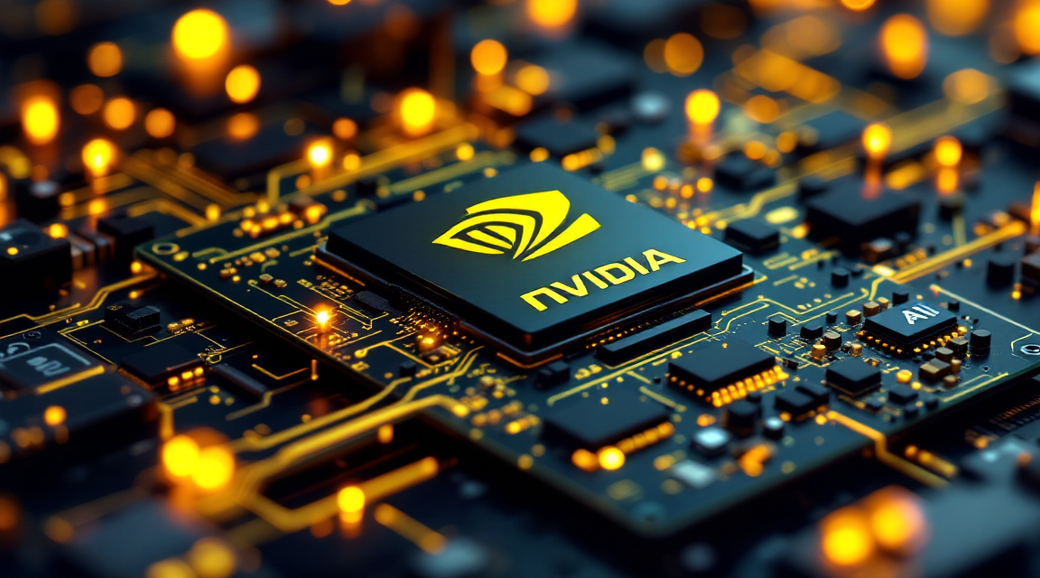
Nvidia has agreed to stand behind the debt that young cloud providers take on to buy its chips. The arrangement, dubbed the AI Compute Partnership, marks a shift in how the company props up demand for its own hardware.
A credit wrapper for hungry buyers
The deal works as a credit wrapper. Nvidia's backing lets newer clouds borrow at lower interest rates to fund large GPU orders. It then guarantees to lease back any capacity they fail to sell, at a flat rate. That promise reassures lenders wary of half-empty data centres. In exchange, Nvidia takes a share of each provider's revenue.
A revenue share that fades over time
The share is a slice of the upside, and it scales down across the life of the contract. Most run for five to six years, with more cash flowing to Nvidia early on. The structure stops short of forcing customers to buy Nvidia chips alone. It still ties them into the ecosystem through a close financial relationship that rewards loyalty.
A departure from past support
Nvidia has stoked the market before, through equity stakes and lease backstops for firms such as CoreWeave. Agreeing to buy CoreWeave's unsold capacity helped steady sentiment and cleared a path to that company's listing. The new programme goes further. It gets other firms to shoulder the purchase while Nvidia absorbs the tail risk, and could let more neo-clouds reach the public markets.
Where the risk sits
Both sides take on danger. The neo-clouds become highly leveraged, and nobody can predict the economic life of a GPU with confidence. Nvidia's backstops soften both problems. Its balance sheet can absorb the cost if demand softens. Fermus co-CEO Tim Rosenfield said customers are committing for the full length of contracts within weeks. If Nvidia could not afford the risk, that would point to deeper trouble across the AI market.
Nvidia has already rented capacity back from Lambda and handed it to its own researchers. That may reflect its growing need for compute to train open-weight models, or a plan to resell the capacity later. The exact revenue-share numbers remain unclear, as does the count of firms signing up. The open question hangs over the whole sector. Demand has run hot for two years, and nobody yet knows how long it lasts.