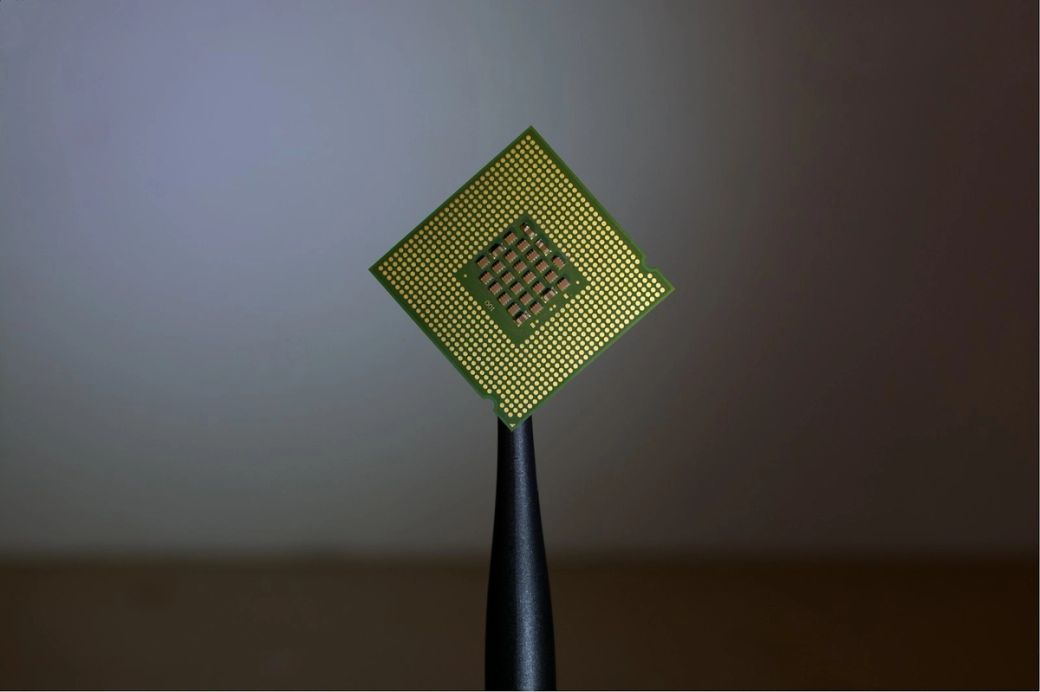
Anthropic, the artificial intelligence company that makes the chatbot Claude, is hiring engineers to design its own computer chips. On the surface that sounds like a niche recruitment story. In practice it is a small but telling sign of how the economics of artificial intelligence are pushing even software companies into the unfamiliar business of building hardware.
What the chips actually do
To understand why this matters, it helps to know what these chips are for.
Systems like Claude run on specialised processors, and the best known are the graphics processing units, or GPUs, made by Nvidia.
These are the engines that do the vast number of calculations required both to train an AI model and to run it every time someone asks it a question.
They are extraordinarily powerful, extraordinarily expensive, and, crucially, in desperately short supply.
Every major AI company is competing for the same limited pool of them, which means access to computing power has become the single biggest constraint on how fast these firms can grow.
Why build your own
Against that backdrop, Anthropic's move makes sense.
The company has posted job listings for what it calls a custom silicon team, seeking engineers with chip-design experience, according to a report confirmed by the company.
The stated goal is to co-design the hardware and the software together, tuning a chip specifically for the way Claude works so that it runs faster and uses less energy.
A general-purpose chip has to be good at many things, whereas a chip built for one company's models can strip away everything it does not need and do the remaining job more cheaply.
There is also a strategic motive that is hard to overstate.
By designing its own chips, Anthropic reduces its dependence on Nvidia and the queue everyone else is standing in, giving it a measure of control over the scarce resource that governs its future.
Still very early
It is important not to overstate how far along this is.
Anthropic has reportedly held early talks about using Samsung as a potential manufacturer, the kind of conversation that signals a project at the starting line rather than a finished product.
The company attached no timeline for when such a chip might actually appear, and designing and manufacturing a working processor is a notoriously slow and difficult undertaking.
For now, the concrete news is simply that Anthropic is assembling the team, not that it has built anything.
Part of a bigger pattern
What makes the story significant is that Anthropic is not acting alone.
The whole industry is moving in this direction, designing bespoke chips tailored to their own needs rather than relying solely on off-the-shelf hardware.
OpenAI recently unveiled a chip of its own, built with the semiconductor firm Broadcom, aimed at the task of running its models, and other labs have used custom silicon for years.
Anthropic already leans on an unusually broad mix of suppliers, drawing computing power from Amazon, Google, Nvidia and AMD, and its own chip effort would add another string to that bow.
The broader lesson is about where the AI industry's real bottleneck now lies.
The competition is no longer only about who has the cleverest model, but increasingly about who can secure and shape the physical machinery to run it.
When a software company decides it needs to design silicon, it is telling you that in the current boom, controlling the hardware has become inseparable from controlling your own destiny.