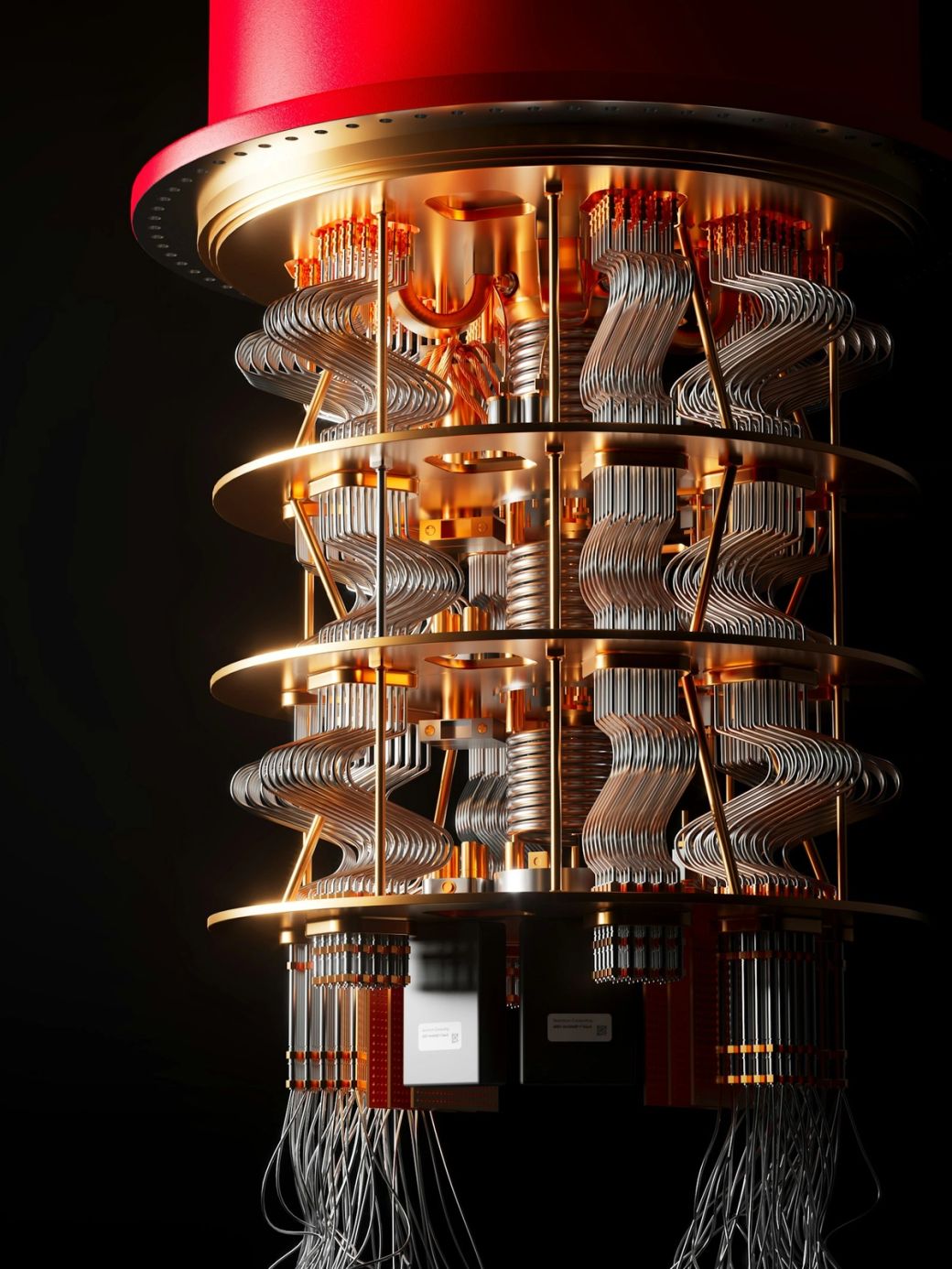
IBM has connected and cooled two modular cryogenic units into a single shared environment, an early step toward much larger quantum computers.
Cryogenic systems keep quantum chips at temperatures close to absolute zero, the conditions they need to function.
The two modules cooled to below 15 millikelvin, more than 180 times colder than deep space, and together stand more than eight feet tall and wide.
The scaling problem
Scaling remains the central obstacle for superconducting quantum computers, the type IBM builds.
Individual processors can hold only so many qubits, the quantum equivalent of the bits in an ordinary computer.
Future machines will therefore need to link many chips inside one ultra-cold system.
Wednesday's result is a step toward that shared infrastructure, using a technology IBM calls the L-coupler to join separate processors.
The company plans to install its Nighthawk processors into the new modules later this year to expand testing.
The road to Starling
IBM is working toward Quantum Starling, which it says will be the world's first fault-tolerant quantum computer when it arrives in 2029.
A fault-tolerant machine can correct its own errors, the barrier that has kept quantum computers from useful work at scale.
Before then, IBM's roadmap targets a system with at least 1,000 programmable qubits by 2027, using the same L-coupler approach.
The announcement is incremental rather than a breakthrough, addressing the engineering of quantum computing rather than the qubits themselves.
But that unglamorous work is exactly what will determine whether IBM hits its 2029 goal.