Every so often a company you had more or less forgotten resurfaces attached to a startling number, and you are forced to reckon with the fact that it was there all along, quietly not going away. The Boring Company is one of these. When Elon Musk founded it in 2016, reportedly out of exasperation with Los Angeles traffic, it had the air of a rich man's side project, the kind of thing that produces a viral flamethrower and a few provocative tweets and then fades. Eight years on, it is in talks to raise around $4 billion at a valuation of roughly $20 billion. That is not a side-project number. That is a serious-company number, and it deserves a moment's scrutiny.
What the company actually does
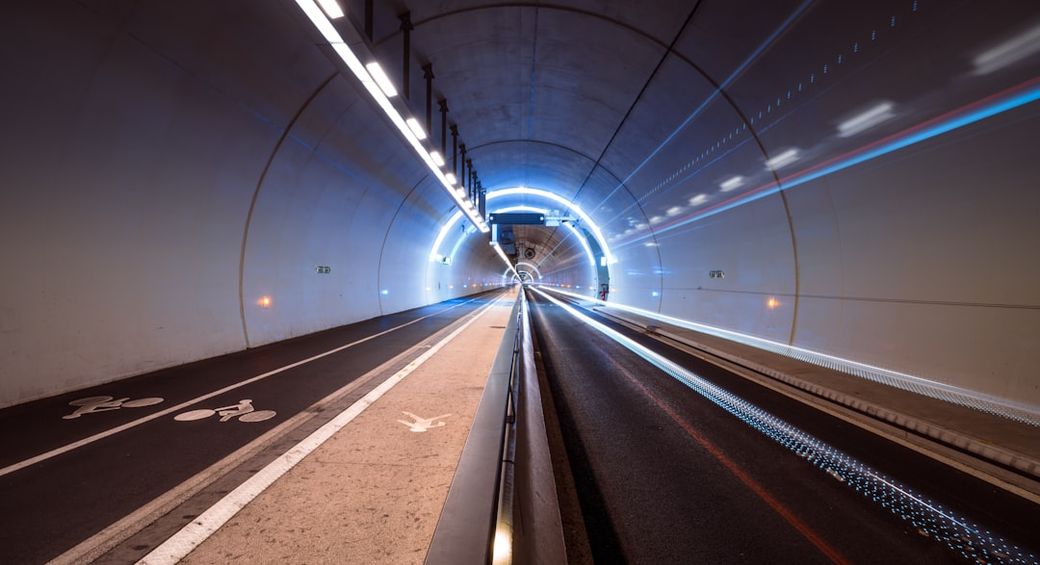
Strip away the Musk mystique and the premise is almost mundane: The Boring Company digs tunnels. Its founding pitch was that conventional tunnelling is absurdly slow and expensive, and that with better boring machines you could dig faster and cheaper, unlocking underground roads beneath congested cities. The vision was three-dimensional traffic, cars whisked below ground while the surface stays clear.
What it has actually built is more modest. The flagship, the Las Vegas Loop, is a network of tunnels under the city through which Tesla cars ferry passengers between stations, largely serving the convention centre. The company says it has carried more than three million people through eight stations. It works, and people use it, but it is a long way from the sweeping subterranean highways of the original sales pitch. It is, in essence, an underground taxi in one city.
The number that raises an eyebrow
Here is what makes the valuation worth pausing on. In 2022 the company was worth about $5.7 billion, after raising $675 million from investors including Sequoia Capital and Founders Fund. The new round would value it at more than three times that, close to $20 billion, in the space of a few years.
Normally you would expect such a leap to be justified by a corresponding leap in the business, a flood of new revenue, a step change in what the company does. That is not obviously what has happened here. The operating footprint is still, essentially, Las Vegas. The company is privately funding a new loop in Nashville and has announced plans for a network under Dubai, whose first four-mile phase is projected to cost $154 million. But its track record of turning proposals into tunnels is patchy. Pitches to Baltimore, Chicago and Los Angeles were all floated and none came to fruition.
So the valuation is not straightforwardly a reward for what the company has built. It is, to a considerable degree, a bet on what it might build, and on who is behind it.
The Musk premium, and its limits
This is where the story stops being about tunnels and starts being about a name. There is, in private markets, something close to a Musk premium: a willingness among investors to pay handsomely for a stake in anything he controls, on the theory that his companies have a habit of eventually doing things that seemed implausible. SpaceX and Tesla are the cited precedents, the moonshots that paid off, and that memory does a great deal of work in justifying a number like $20 billion for a business with one operating tunnel network.
But the timing complicates the picture, and this is the genuinely interesting part. The raise comes just as the rest of the Musk empire hits turbulence. Tesla shares recently fell sharply in a single session after the carmaker missed earnings and reported its first negative cash flow in two years. SpaceX, which went public in June in a record flotation, has since slid around 50% from its post-listing peak. The premium, in other words, is being tested elsewhere even as The Boring Company reaches for it.
The part the valuation leaves out
There is a harder edge to this story that the funding headline tends to skip over. Building tunnels is dangerous, physical work, and The Boring Company's has come with a troubling record. Workers have suffered serious injuries. Nevada regulators said last year that the company violated environmental regulations nearly 800 times, and there have been reports of firefighters sustaining chemical burns during a safety exercise at the Las Vegas site.
These are not footnotes. A company being valued at $20 billion on the promise of digging faster and cheaper than anyone else invites the obvious question of what corners are being cut to do so, and at whose expense. Investors pricing the future tend to discount this kind of thing. Regulators, workers and the cities being pitched cannot.
Why it matters anyway
For all the scepticism the valuation warrants, it would be a mistake to dismiss the thing entirely, because the underlying problem is real. Cities are choking on traffic, conventional infrastructure takes decades and fortunes to build, and a company that could genuinely make tunnelling dramatically cheaper would be valuable in a way that has nothing to do with hype. The prize, if it exists, is enormous.
The open question is whether The Boring Company is the outfit that captures it, or merely the one currently best positioned to raise money against the possibility. The deal has not closed, and the terms could still change. But the very fact that a company most people had filed away as a curiosity can resurface at $20 billion tells you something about the moment we are in: one where a compelling story, a famous founder and a single working demonstration can, for now, outweigh a thin operating record and a stack of unbuilt plans. Whether that is confidence or credulity is the thing worth watching as the money moves.