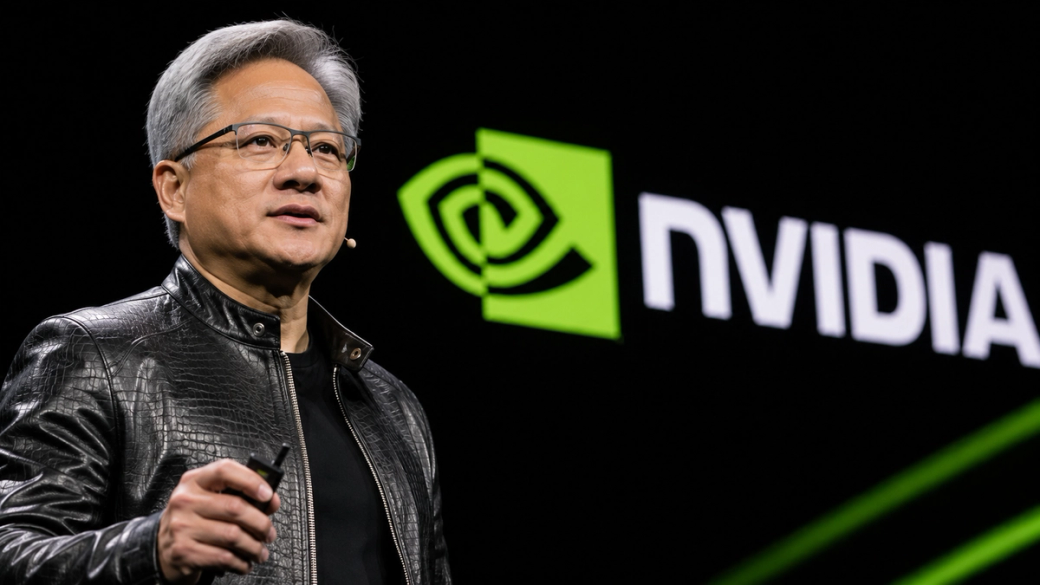
Jensen Huang, the chief executive of Nvidia, has again argued against new AI-specific laws. Barron's reported that he offered a "more radical solution" if the industry cannot "overcome the problem of unsafe AI".
He has made similar points in interviews and appearances this month.
His line has been consistent: he rejects doomsday scenarios and resists calls to slow development.
He has pushed back against warnings from other figures in the industry.
He called predictions that AI could wipe out humanity within a decade "completely false".
He has also rejected calls to pause or slow work on frontier models, the most advanced AI systems.
There is a business tension beneath the argument.
Huang told reporters he expects Nvidia to sell twice as many chips next year.
Yet he has also said the current AI infrastructure boom will not last forever, and predicted a slowdown within a few years.
That combination of opposing new legal limits while forecasting both strong near-term growth and an eventual cooling helps explain why markets reacted to his remarks.
The point is simple.
The head of the dominant supplier of AI chips is arguing against new layers of law while his company ramps up production.
That shifts the debate away from limits on AI models and towards who controls computing power and how it is deployed.
Regulators, large cloud providers and corporate buyers will be watching closely.